
From Cheering Cyclists to Standing Ovations: My Alpine Adventure. Travel Bits.
Jules Heartly | June 2025
From Cheering Cyclists to Standing Ovations: My Alpine Adventure
A Journey or A Symphony of the Road.
What began as a pilgrimage sparked by two passions—the thundering wheels of El Giro de Italia in Bormio and an irresistible pull toward Vienna’s musical soul—transformed into an epic overture across three countries. Like a composer drawn to complete an unfinished symphony, I found myself mapping a route from the Italian Alps to Austria’s imperial capital, letting the open road become my conductor’s baton.
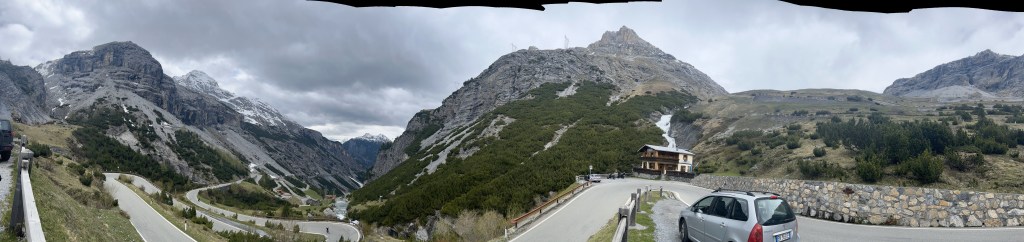
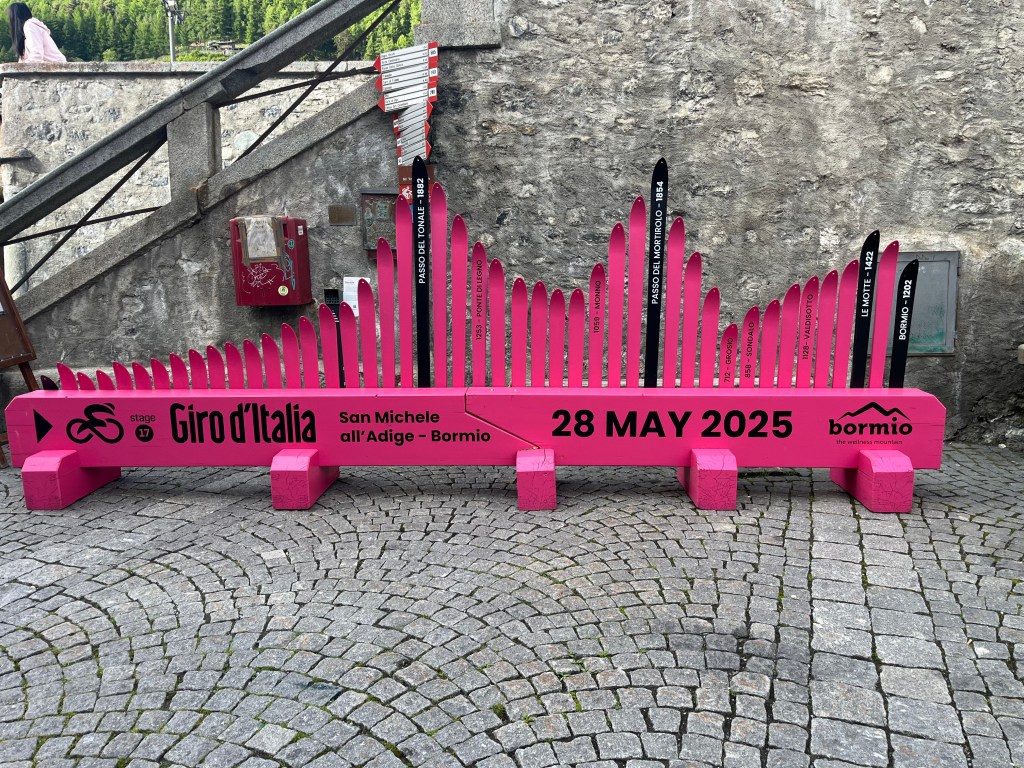
First in Bormio, a town known for its thermal springs, I met with a couple of good friends from Milan and after cheering the Giro D’Italia cycling titans, we went up the Stelvio Pass to check the snow on its readiness for the summer ski season which goes from the last week of May to October when the mountain is closed for business.
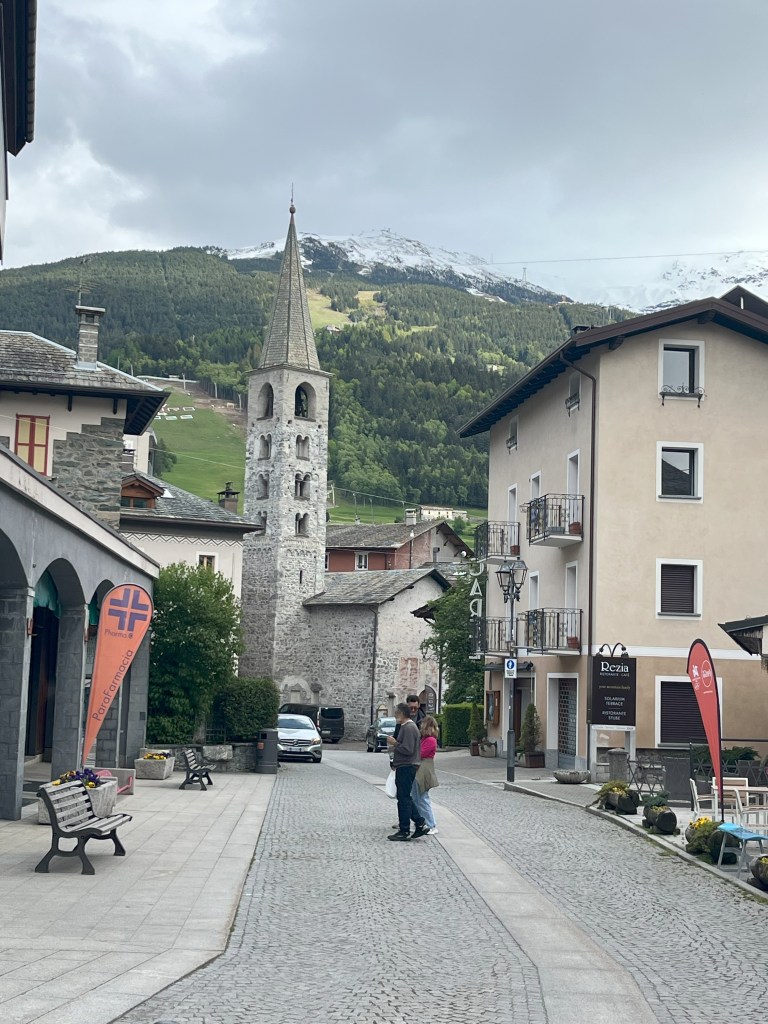
Back in Bormio, we enjoyed the walks by the Adda river and of course the delicious Pizza Chiero a typical dish of the region, along with local wine. (valtellina).
The Mountain’s Prelude: Conquering the Stelvio Pass
As you all know, the love for music transcends the mere symphony of instruments beautifully played. It extends to the endless concert and dance of mountains, their rhythmic tree-sways composing nature’s most honest melodies. The mambo dance of ancient stones, accompanied by infinite wind tones, choreographs clouds in their eternal ballroom dance across azure skies.
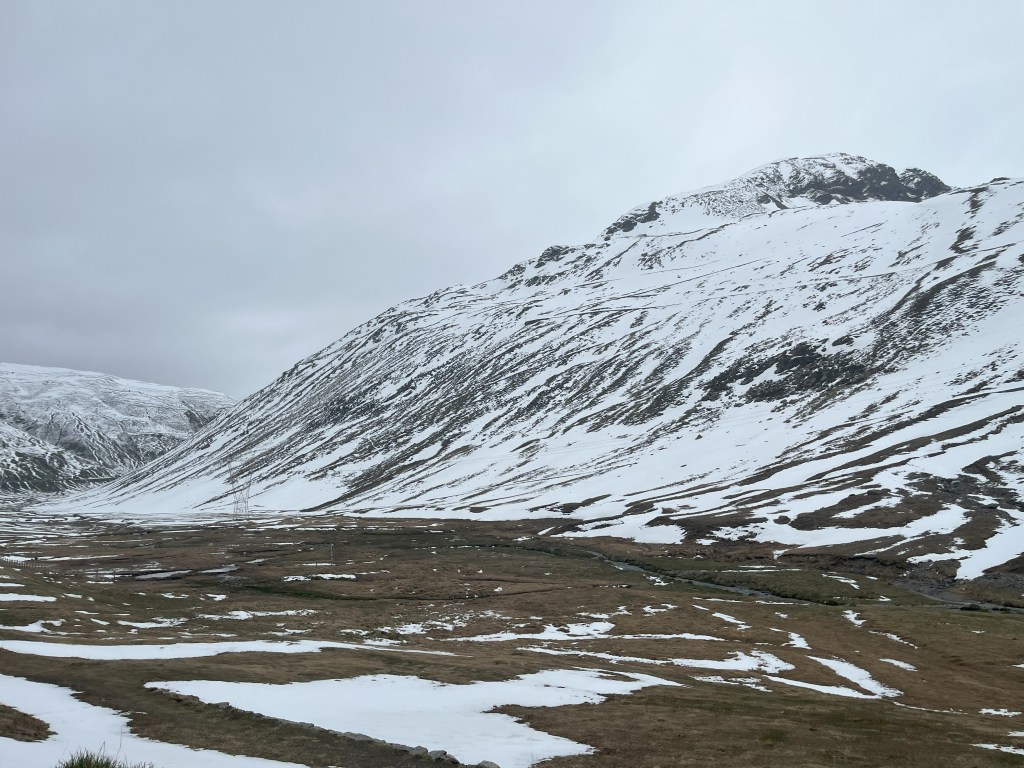
And that is how it felt ascending the legendary Stelvio Pass—Italy’s serpentine masterpiece that climbs skyward through 48 hairpin turns like musical notes spiraling up a staff. For countless kilometers, the windy roads sang their siren song, each curve revealing new movements in this alpine symphony.
The descent into Switzerland proved even more dramatic, a staccato of steep, narrow passages that demanded both courage and precision.
My first movement found its crescendo at Plain in Pigna, where I discovered the rustic poetry of Rösti—the golden, crispy potato dish that serves as St. Margarita Val Müstair’s culinary signature. This humble meal, paired with a robust local beer, became my intermission—a necessary pause to recharge body and spirit before the scenery-shifting road symphony continued toward Austria.
Traveler’s Note
The Stelvio Pass isn’t merely a route—it’s a rite of passage. Drive it like you’re conducting Beethoven’s 9th: with respect, precision, and an appreciation for its magnificent complexity.
Innsbruck: Where Mountains Meet Melody
Approximately 180 kilometers from my starting point, Innsbruck emerged like a perfectly orchestrated finale—a city cradled by the majestic Nordkette range like a precious violin nestled in its case. This captivating blend of historic charm and vibrant alpine culture struck me as Austria’s most honest expression of geographical poetry.
The golden spires of the Hofburg Palace rise like organ pipes against the dramatic mountain backdrop, while the famous Goldenes Dachl (Golden Roof) gleams like a conductor’s baton catching stage lights. I wandered through cobblestone streets that seemed to hum with centuries of stories, each step echoing off ancient walls that have witnessed the march of empires.
In a sun-dappled café, I savored my first Melange—Austria’s answer to the cappuccino, as smooth and complex as a Mozart sonata. The city embodies a perfect duet between winter sports dynamism and artistic sophistication, where Olympic legacy meets imperial grandeur in harmonious coexistence.
Essential Travel Harmonies
- Driving Alert: Innsbruck’s city center is a complex composition of restricted zones. One wrong turn into a pedestrian area will cost you a fine faster than a missed note ruins a solo. Study the signs like sheet music—every symbol matters.
- Vignette Vital: Austria demands its highway toll sticker like an opera demands its overture. Skip it, and you’ll face a €125 fine that will sour your entire journey’s melody.
- Language Lifeline: Austrian road signs speak only German. Learn basic navigation vocabulary—it’s your musical notation for successful travel.
Regensburg: Medieval Harmonies Along the Danube
The 360-kilometer journey to Regensburg unfolded like a pastoral symphony, each movement painted in varying shades of emerald. The peaceful, traffic-free country roads became my private concert hall, where rolling hills provided the percussion and distant church bells marked the tempo.
Regensburg, a UNESCO World Heritage site, perches along the Danube river like a medieval manuscript illuminated in stone and mortar. The city’s core pulses with architectural crescendos—most notably the Stone Bridge, a 12th-century engineering marvel that spans the river like a frozen musical phrase suspended in time.
Wandering through cobblestone streets felt like reading ancient sheet music, each boutique and café adding its own note to the urban composition. The air carried the aromatic overture of Bavarian pretzels, leading me inevitably to the historic Wurstkuchl, where sausages sizzle in perfect culinary rhythm. This legendary establishment has been grilling its signature bratwurst since 1146—making it possibly the world’s oldest continuously operating restaurant.
The Regensburg Cathedral (Dom St. Peter) struck me as architecture’s answer to a Bach fugue—complex, soaring, and spiritually transcendent. Its stained-glass windows bathe the interior in kaleidoscopic light, creating a visual symphony that changes with the sun’s daily passage.

And don’t be surprised as I did, when in the evening, the streets seem deserted and the few people you find seem to be in a hurry… and that is perhaps because the city’s most enchanting movement occurs each evening at the Stone Bridge, where locals and travelers gather in unspoken communion to watch the Danube reflect the day’s final golden notes. This spontaneous congregation reminded me that the most beautiful music often happens without formal orchestration.
Regensburg Revelations
- Hidden Gem: The Stone Bridge sunset gathering isn’t in any guidebook, yet it’s become the city’s most authentic daily performance.
- Accommodation Advice: Staying in the old town costs extra euros but provides priceless proximity to medieval magic.
Passau: The City Where Rivers Sing
A mere 75 kilometers downstream, Passau awaited like a perfectly timed musical transition. Known as the Dreiflüsestadt (City of Three Rivers), this baroque jewel sits at the confluence where the Ilz, Danube, and Inn converge in liquid harmony—nature’s own triple concerto.
St. Stephen’s Cathedral dominates the skyline like a towering organ pipe, and indeed, it houses one of the world’s largest pipe organs(17,774)—an instrument so magnificent it seems to make the entire city its resonating chamber.
Walking along the riverside promenade, I felt the three rivers’ different personalities: the dark, mysterious Ilz; the broad, confident Danube; and the glacial-green Inn, each contributing its voice to this aquatic choir.

My palate discovered its own harmony in Zwetschgendatschi—a traditional plum cake that captures summer’s essence in every bite. Paired with freshly brewed coffee on a sun-kissed terrace, this simple pleasure became a perfect intermezzo in my journey’s larger symphony.
Park and Write
An interest intermission I found while driving in Austria was the road signs “PARK AND WRITE”. As a blogger and writer my first thought of it was an invitation to write about the driving experience and so forth, but while it was an invitation to write the real intention is for drivers to hold sending texts or WhatsApp messages until the cars are safely parked on a rest area.
Krems: Wine Country’s Gentle Waltz
Venturing 130 kilometers it is Krems, the Wachau Valley’s best-kept secret. This charming town proved to be wine country’s most eloquent composer, where vineyards cascade down terraced hillsides like musical scales descending toward the Danube. A stop to make next time, since Vienna waited for me and I couldn’t fail our rendez-vous.
Vienna: The Grand Finale
Finally, after traversing hundreds of kilometers through Europe’s heartland, Vienna rose before me like Billy Joel’s beloved melody made manifest in stone, music, and imperial grandeur.
From the moment I crossed into Austria’s capital, elegance enveloped me like silk wrapping around a Stradivarius. The city doesn’t simply contain music—it breathes it, dreams it, and serves it with every cup of coffee and slice of Sachertorte.
Schönbrunn Palace sprawls across the landscape like a baroque symphony frozen in Habsburg yellow, its gardens extending in mathematical precision that would make Mozart weep with joy. Each room tells a movement in the imperial story, where empress and emperor once danced to the same waltz that still echoes through these gilded halls, the blue danube.

Vienna’s coffee house culture struck me as civilization’s most perfect invention—spaces where time moves like adagio, where conversation flows like wine, and where every sip of Melange or an Eiskaffee, carries the weight of centuries. These institutions aren’t merely cafés; they’re cultural conservatories where ideas ferment alongside the finest beans.
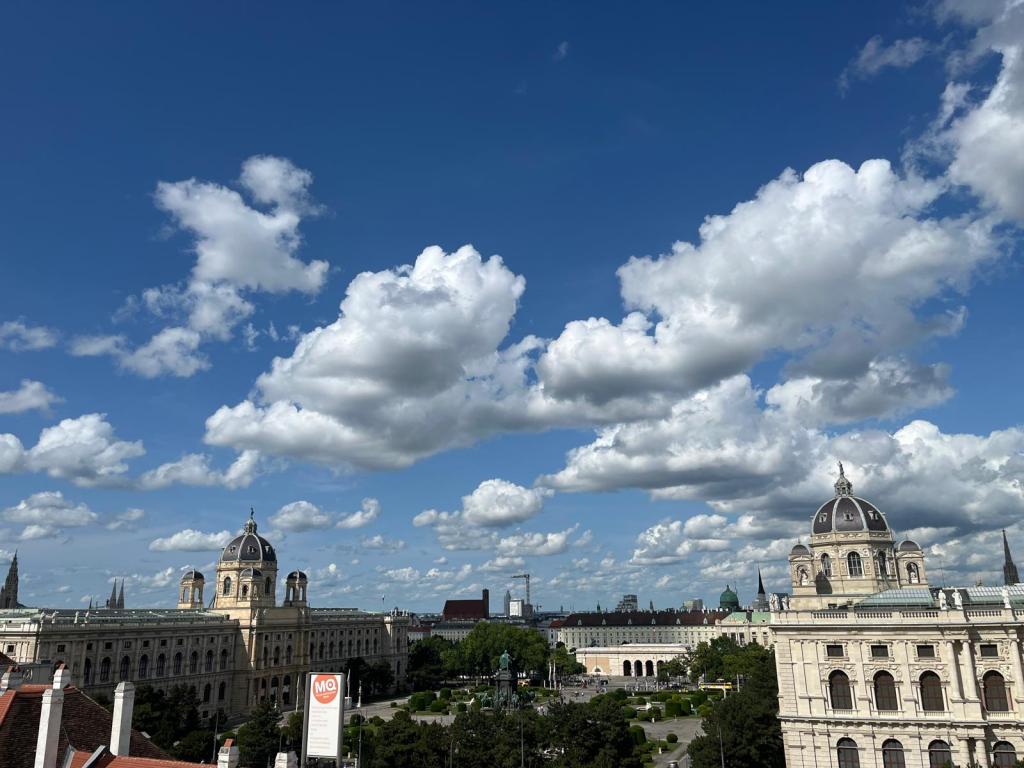
The city’s streets pulse with invisible orchestras. Along the Ringstraße, grand architecture performs a visual symphony of styles—Gothic, Renaissance, Baroque, and Art Nouveau movements flowing seamlessly into one another. The MuseumsQuartier adds contemporary notes to this classical composition, proving that Vienna’s musical DNA continues evolving. And a good proof is the number of fabulous street performers, lots of them Vienna musical students.
Every neighborhood offers its own distinctive theme: the stately grandeur of the Inner City, the bohemian creativity of the Naschmarkt, the royal elegance of Schönbrunn, and the youthful energy of the university district. Together, they create Vienna’s urban symphony—complex, sophisticated, and eternally enchanting.

The Concert: Altenberg Trio’s Transcendent Performance
To close my Viennese visit on the highest possible note, I attended a concert by the Altenberg Trio Wien—a piano trio formed in 1994 and named after the beloved Viennese poet Peter Altenberg. The evening’s performers at the Musikverein, were Christopher Hinterhuber on piano, Ziyu He on violin, Peter Somodari on violoncello and Tomoko Akasaka as an invited Violinist.
The performance became an intense emotional odyssey, carrying the audience from initial anticipation through building intensity to a transcendent climax that only live chamber music can provide. The trio created that rare, almost spiritual connection between performers and audience that makes classical music not just entertainment, but transformation.
Hinterhuber’s piano sang with crystalline clarity, each note precisely placed yet emotionally charged. Ziyu He’s violin soared and swooped like a bird of paradise, while Somodari’s cello provided the deep, resonant foundation that anchored the entire musical architecture. Together, they wove sonic tapestries that seemed to capture the very essence of Vienna’s musical soul.

The evening’s program flowed like a perfectly curated journey through chamber music’s greatest peaks, each piece building upon the last until the final notes hung in the concert hall’s silence like incense in a cathedral. The prolonged ovation that followed wasn’t mere appreciation—it was gratitude for having witnessed musical alchemy at its finest.
In the soft embrace of velvet night,
Three souls converge, a trio of delight,
Under the whisper of candle’s glow,
The Altenberg Trio begins to flow.
Fingers dance on ivory keys,
A sonorous touch that stirs the breeze,
Christopher’s hands, with grace they glide,
Each note a caress, a tender ride.
Violin strings sing, sharp and sweet,
Ziyu’s bow, a lover’s heartbeat,
Each stroke ignites the air with fire,
A passionate tale, a sonnet of desire.
And then the cello, deep and low,
Peter’s embrace, the undertow,
With every pull, a thrum of ache,
Resonating in silence, a longing wake.
The melodies entwine, a lover’s kiss,
In perfect harmony, a moment of bliss,
The audience holds its breath, enthralled,
As the music envelopes, soft and enthralled.
Eyes closed tight, lost in the sound,
A world unfurls, where hearts abound,
Each phrase a whisper, each pause a sigh,
As notes entwine, weaving lullabies.
The music swells, a tidal wave,
An ocean of emotion, wild and brave,
Bodies sway with the rhythm’s flow,
Under the spell, the senses glow.
Fingers tremble, hearts more alive,
In this sacred space, passions thrive,
The trio ignites the air, electric, raw,
As longing spirals, unspoken, in awe.
The final notes linger, like breaths of night,
A lingering promise, a soft twilight,
And as silence falls, a collective gasp,
The audience, breathless, in love’s tender clasp.
A journey complete, yet still it remains,
The echoes of pleasure wrapped in refrains,
The Altenberg Trio, a symphony bold,
An erotic embrace, a memory to hold.
A memory indeed to hold as during this performance my soul felt even more alive, and in love with life.
Practical Travel Symphony
Currency Cadence: DO Carry euro coins religiously—many public restrooms reject credit cards and demand exact change. It’s a small price for basic human dignity.
Language Lessons: Learn city names in their native tongues. Wien (Vienna), München (Munich), and other local appellations will transform your GPS from confusion to clarity.
Documentation Dance: Your vignette isn’t optional—it’s your ticket to Austrian highway harmony. Purchase it before crossing borders, or face expensive discord.
Road Sign Rhythm: Austrian signs speak only German. Master basic directional vocabulary, or risk conducting a very expensive mistake.
The Journey’s Lasting Echo
This road trip from Bormio to Vienna became more than mere travel—it evolved into a multi-movement symphony where each destination added its voice to an increasingly complex and beautiful composition. The Stelvio Pass provided the dramatic opening, Innsbruck offered alpine poetry, Regensburg delivered medieval harmonies, Passau sang with three rivers’ voices, Krems whispered wine country secrets, and Vienna performed the grand finale.
But perhaps the journey’s greatest revelation was discovering that Europe’s true music doesn’t only live in concert halls and opera houses. It resonates in mountain winds, river confluences, cobblestone echoes, and the shared silence of strangers watching sunsets together. Every kilometer traveled became a note in my personal symphony—a melody I’ll carry long after the final applause has faded.
The road from Bormio to Vienna taught me that the best journeys don’t just take you somewhere—they make you someone. And in Vienna’s musical embrace, surrounded by centuries of artistic genius, I finally understood why my dual passions for cycling and music had conspired to orchestrate this perfect pilgrimage.
Bravo, Europa. Encore, sempre.
Thank you for reading my blog. I would love to hear about your travel stories.
Remember to follow me on social media @JBRADIANT and to visit my website for updates on my ongoing work.
 lifeinxxidotcom
What a beautiful journey—and so musically written! I happened to visit Vienna this year too, and your words brought the city back to life for me. There really is something magical in the air there… between the coffee houses, the architecture, and the ever-present music. Thanks for sharing this lyrical adventure!
LikeLike