Where History Breathes and Wanderers Feel Like Old Friends
Jules Heartly | Travel Bites. Summer 2026
My interest in #Croatia began not with a travel magazine, a documentary, or an algorithm-fed recommendation. It began with a person.
Through a work project, I met Zvonimir Bulaja — a Croatian native who turned out to be a writer, translator, book publisher, editor, filmmaker, and singer. He was also, unmistakably, a proud ambassador of his homeland from the very first conversation, the kind of person who talks about where he comes from the way musicians talk about a song they wrote at three in the morning — with an intimacy that makes you feel you’ve been left out of something important.
Over the years, we chatted on and off about everything: sports, politics, family life, the ordinary textures of day-to-day existence. He would share photographs of outdoor trips with his family, stories about his country’s landscapes, and a quiet, consistent insistence — never pushy, always certain — that I needed to experience Croatia for myself.
Eventually, I listened. And it changed the way I think about traveling to unknown countries.
Croatia is a country of unlikely contrasts — medieval walled cities perched above turquoise Adriatic coves, snow-capped mountains within an hour’s drive of fishing villages, national parks of almost supernatural beauty sitting quietly beside modest market towns. It joined the European Union in 2013 and adopted the euro in 2022, but there is nothing generic about the place.
The people are warm, well-educated, and — almost universally — startlingly fluent in English. Not textbook English. Real English, spoken with ease and a kind of effortless confidence that catches you off guard the first time, like hearing a perfect stranger hum a song you thought only you knew.
I arrived with the standard tourist itinerary in mind: Split, Dubrovnik, and perhaps Zagreb if time allowed. As it turned out, that itinerary would teach me something important about the gap between a plan and an experience, and the need to always be playfully curious and open-minded.
Split is Croatia’s second-largest city, built around — and essentially inside — one of the most extraordinary Roman ruins in the world. The Palace of Diocletian was constructed at the end of the third century AD by the Roman Emperor Diocletian as his retirement residence. Born nearby in Salona, Diocletian rose through the military ranks to become emperor in 284 AD, and when he stepped down from power in 305 AD, he returned home to this fortified compound on the Adriatic coast.
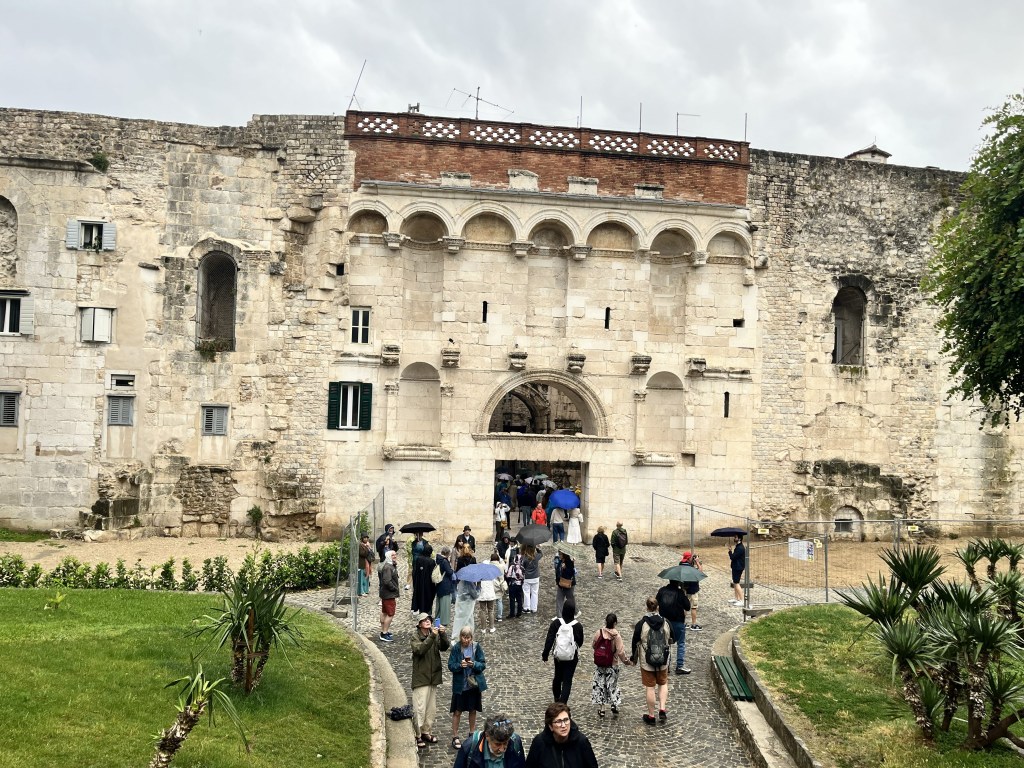
The palace covers seven acres. Its walls reach up to 22 meters on the seaward side, and the original four gates — the Golden, Silver, Bronze, and Iron Gates — still frame the life of the old city. What makes Split extraordinary is that this is not a ruin cordoned off behind museum ropes. More than 3,000 people live and work within the palace walls today.
You don’t visit it so much as you fall into it — one moment I was on a modern street, and the next, the stone closed around me and the centuries pressed in from all sides. The walls exhale a coolness that belongs to them alone, a mineral breath that no air-conditioning can replicate, carrying in it the faint ghost of every season they have survived. Boutiques, restaurants, jazz bars, and centuries-old churches occupy the same ancient stones.
A cathedral that began as Diocletian’s mausoleum is now a functioning Catholic church. The Romans, the medieval Venetians, the Habsburg administrators — they all left layers here, and Split wears them all at once, casually, the way an old professor wears a jacket with patches on the elbows.
Walking the old city, the sound shifts constantly — from the clatter of café chairs on polished flagstones to the sudden, surprising silence of a half-hidden courtyard where laundry hangs between columns that have stood for seventeen centuries.
You smell espresso and sunscreen and, underneath it all, something older and harder to name: the particular damp of stone that has absorbed two thousand years of Adriatic air. The salt is not just in the sea here. It is in the walls. I felt it on the back of my hand when I traced the stone.
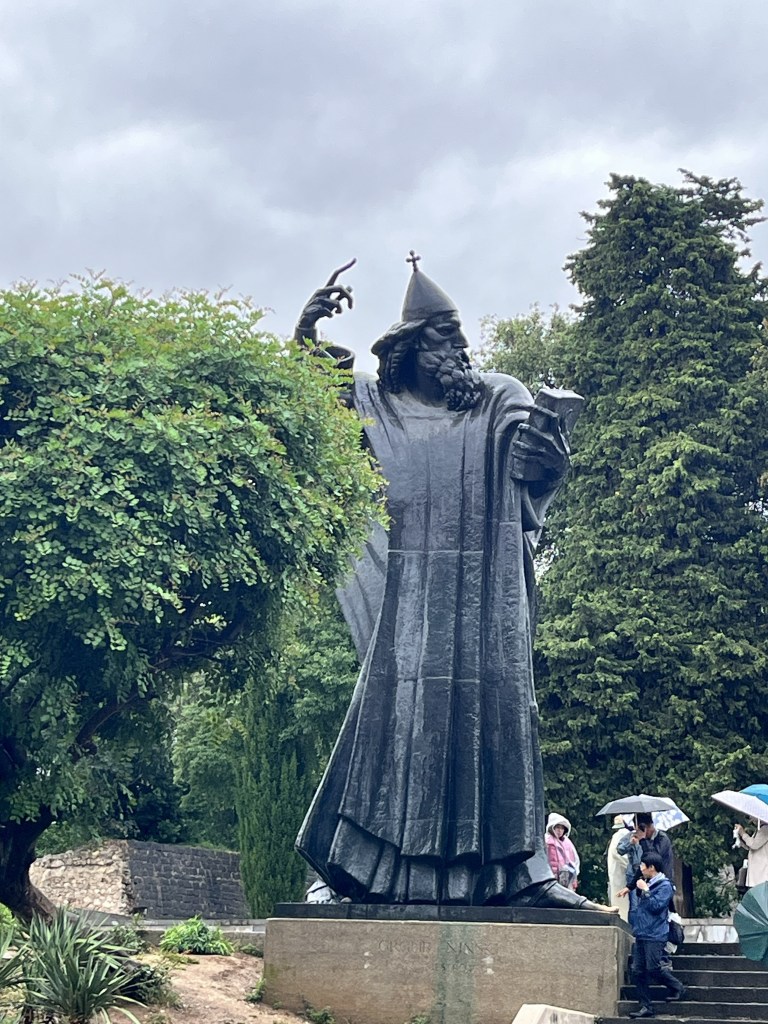
We ended up at the Golden Gate where just outside, standing as a tall guard, was the bronze statue of Grgur Ninski. The line of people waiting to rub its big toe — tradition says it brings good luck — stretched around the corner, and the toe itself had been polished to a blinding gold by the accumulated faith, or perhaps the accumulated hope, of countless hands.
I rubbed it too. Of course I did. There is a particular surrender that happens when you travel alone in an old place — you stop needing reasons and start following the current.

Beyond the palace, Split offers ferry connections to the islands of Brač, Hvar, Vis, and Šolta. The island of Hvar is consistently rated among the most beautiful in Europe. Brač is home to Zlatni Rat, a beach whose distinctive horn-shaped tip shifts direction with the currents — a beach that cannot make up its own mind, which somehow makes it more beautiful. Food lovers should seek out peka — lamb or octopus slow-cooked under a bell-shaped iron lid covered in embers, a preparation that is patience made edible. The first bite carries something close to a revelation: the meat falls apart not because it was forced to, but because it was given time. It tastes the way a long afternoon feels.
I didn’t get to take the ferry, as rain came one of the days I was there — a warm Mediterranean rain that turned the limestone streets slick and silver and sent tourists scattering while locals simply opened umbrellas and continued. I would love to take it next time.
Some things are better left as reasons to return.
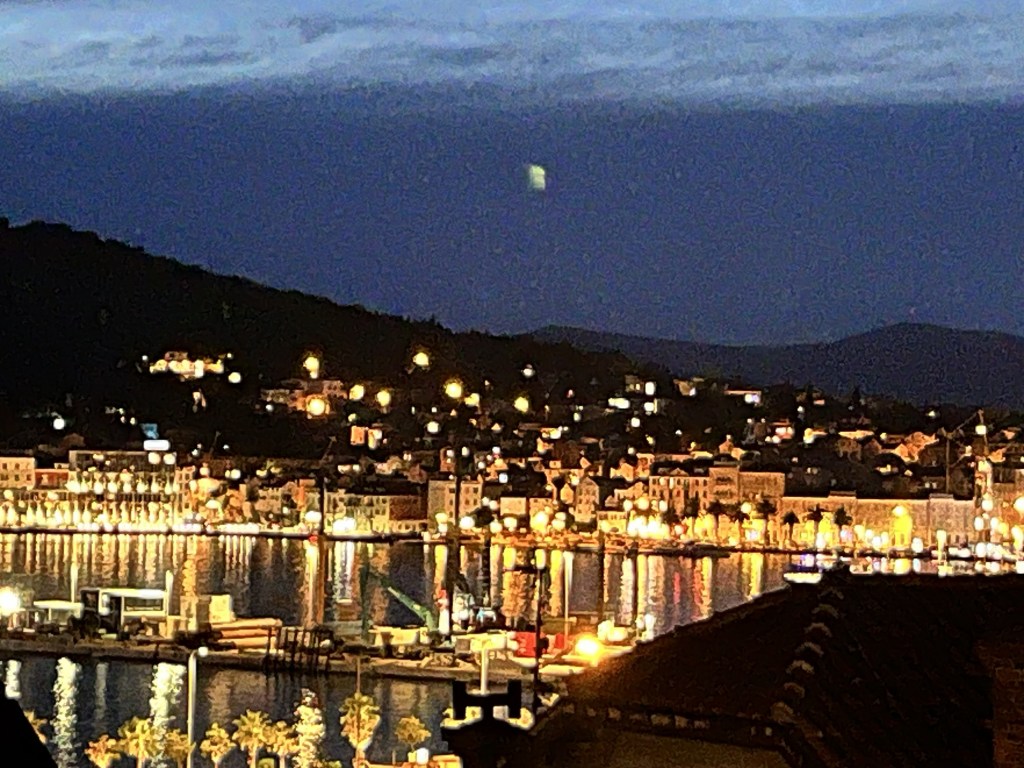
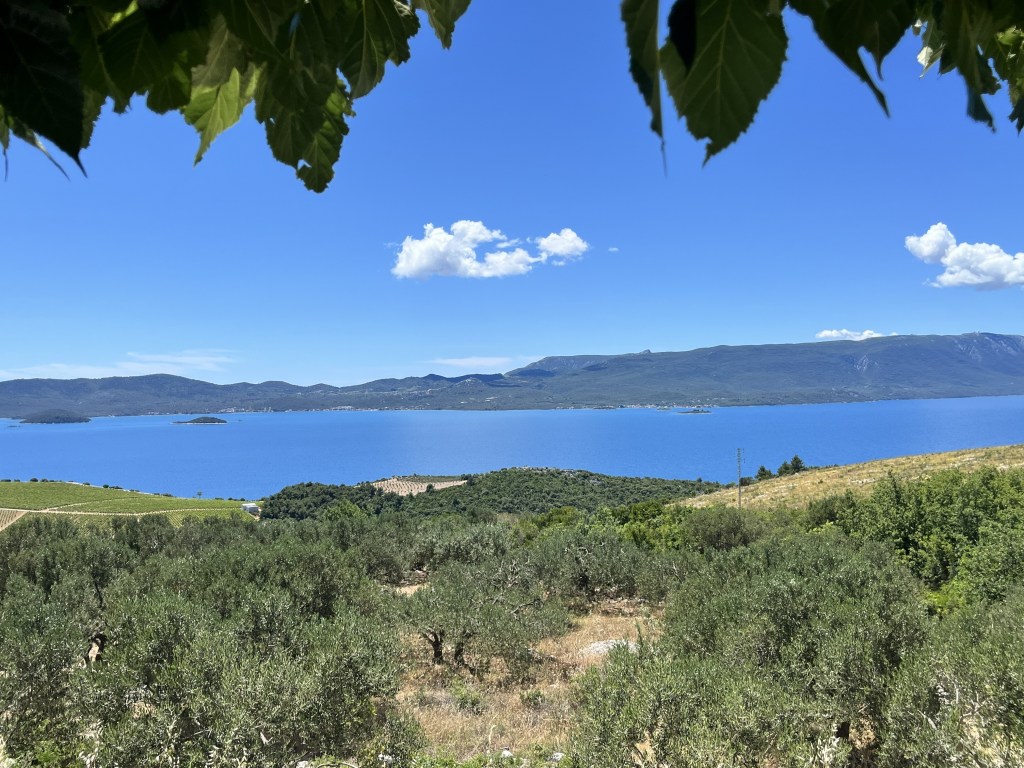
The road from #Split to #Dubrovnik is itself an experience that resists description and demands it simultaneously. It is a winding coastal highway where the Adriatic appears and disappears through the hills like a conversation that keeps returning to the same luminous point — each curve revealing a view that seems painted rather than real, the kind of blue that makes you feel your eyes haven’t been working properly until this moment.
The scenery reaffirmed what Zvonimir had told me, over and over again across the years: “It is crazily magical. You must see it yourself.” I had nodded politely at that, the way you nod at someone describing a dream.
Sitting in that car, watching the light play across the water and the limestone and the dark cypress trees, I understood that he had not been exaggerating. He had, if anything, been restrained. I didn’t know whether to take pictures or simply let my brain fill itself — to accept that some things belong to memory and not to photographs.
Dubrovnik has been called many things — the Pearl of the Adriatic, the City of Stone, a republic of merchants who turned diplomacy into an art form. The Republic of Ragusa, as it was once known, maintained its independence for over four centuries through a combination of shrewd politics, strategic alliances, and walls.
The city walls that encircle the old town today stretch nearly two kilometers in length, reaching up to 25 meters in height and six meters in thickness. Construction began in earnest in the 13th century and continued through the 16th, with additional fortifications added after the fall of Constantinople in 1453 — what historians now call Dubrovnik’s Golden Age. The result was a fortified city that managed to resist Ottoman expansion, survive earthquakes, and trade with all sides of a divided world. A city, you sense walking its streets, that had learned very early that beauty and survival were not separate projects.
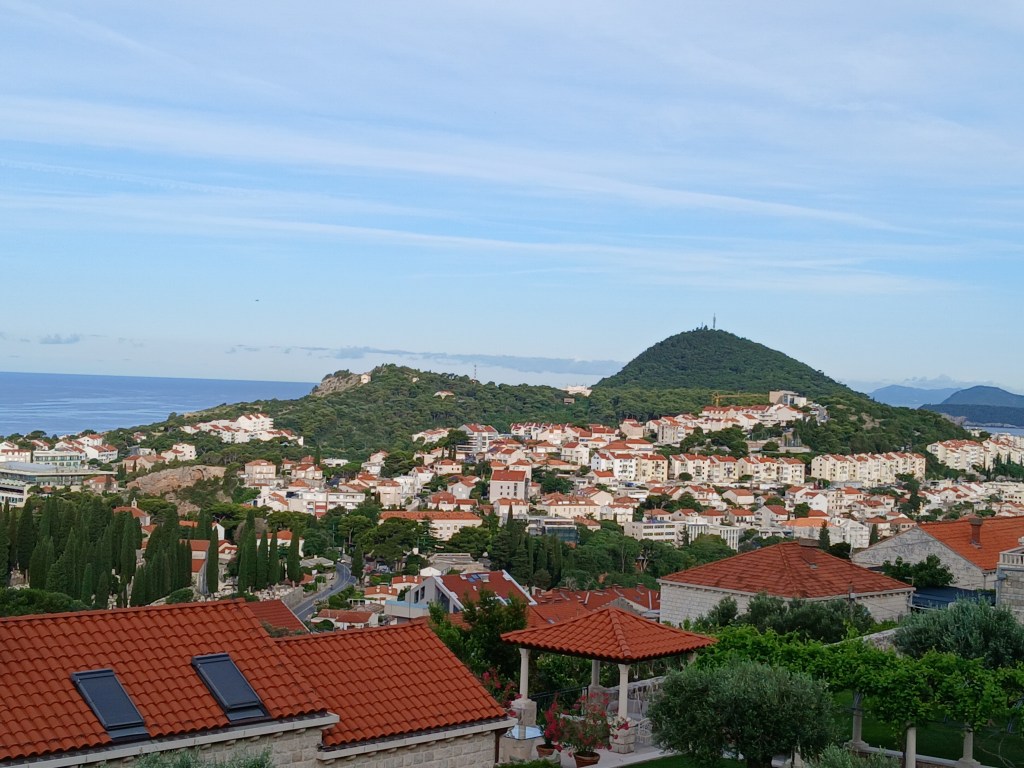
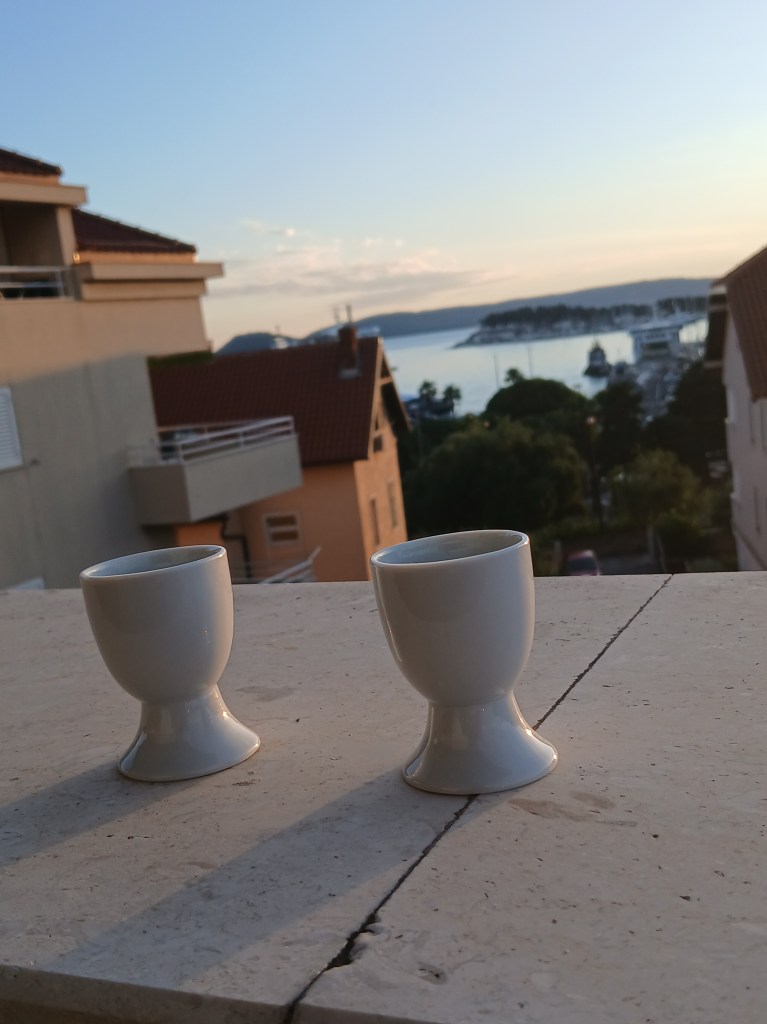
I stayed a little up the hills, at a place with a stunning view of the Adriatic — the sea spread out below like hammered silver in the morning light, shifting to deep cobalt by afternoon. Getting to the old city meant an inclined walk down stone steps that had been worn smooth by generations of feet, and the climb back up each evening became its own small ritual: the muscles burning, the view opening behind you, the breath coming harder, and then — at the top — that particular silence that only arrives after effort.
My host, watching me arrive with my carry-on suitcase the first time, took one look at my face and smiled with the knowing sympathy of someone who has watched this scene repeat itself a thousand times. She said nothing. She didn’t need to.
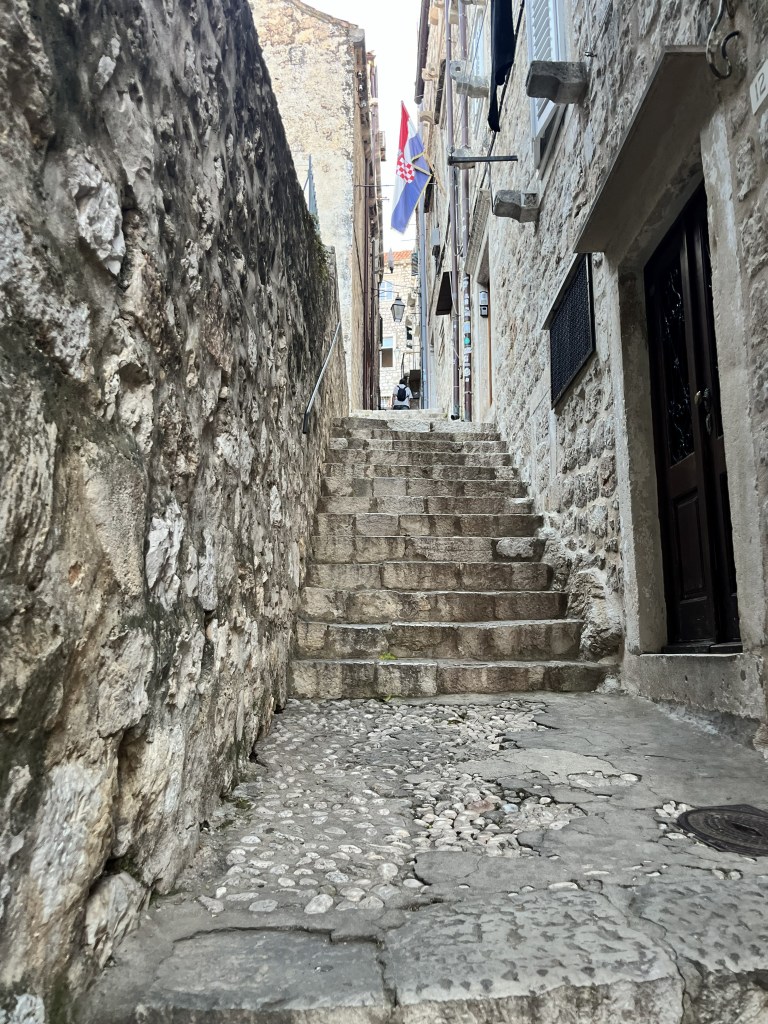
Walking the walls — the most popular activity in Dubrovnik, and deservedly so — gives you a perspective that nothing else provides. The old city appears below like a map of its own history: the Rector’s Palace, the Dominican Monastery, the baroque cathedral, the limestone streets polished bright by centuries of feet and afternoon sun, glowing a pale amber in the late light.
The stones underfoot on the walls are uneven and ancient and warm from the day’s heat, and the sea breeze carries a saltiness so clean and sharp it feels medicinal, the kind of air that makes you feel that your lungs have been gently reset. Out to sea, the island of Lokrum sits close enough to swim to — close enough to remind you that this republic always had one eye on the water, one hand on a diplomatic letter, and a quiet plan for everything.
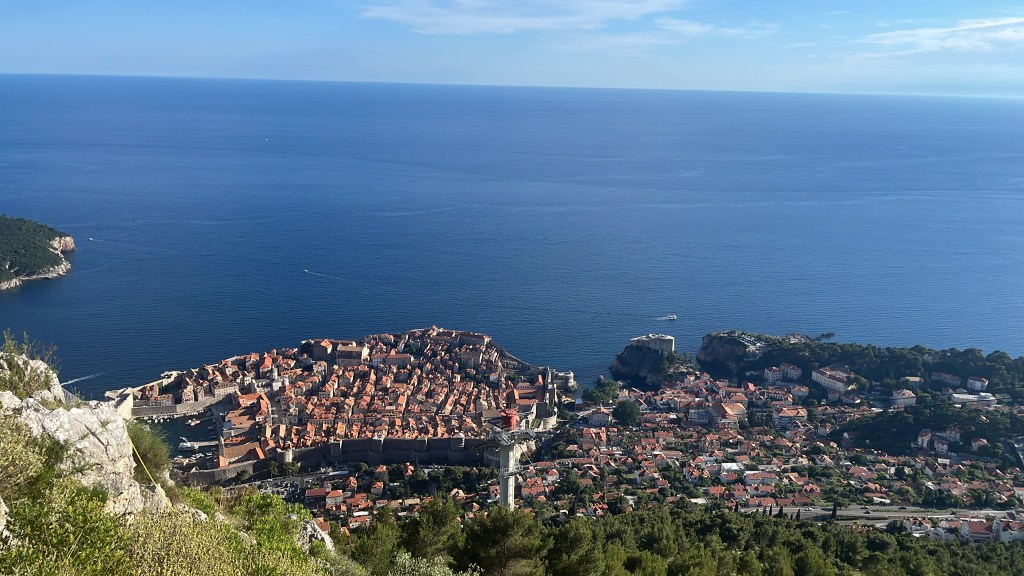
After walking the walls, we sat at a café where jazz drifted from somewhere inside — unhurried, conversational jazz, the kind that doesn’t ask anything of you. We had a drink and practiced the art of people-watching. In a place flooded by tourists, this requires no effort at all.
The crowd itself becomes the performance: the sunburned and the stylish, the wide-eyed first-timers and the locals moving through them all like water through rocks, knowing every shortcut, every shadow, every crack in the stone.
In the evening, we went up to Mount Srdj for the panoramic views of the Dalmatian Coast — a landscape so improbably cinematic it makes you feel that the earth was showing off.
We had dinner at #KonovaDubrava, an authentic Croatian restaurant where the food arrived in portions that communicated a generosity bordering on insistence. The wine was cold and local and very good, and the coast below us slowly turned from gold to rose to the deep purple of a sky that didn’t want to let the day go.
I had left #Zagreb for last in my itinerary, and I had done so with modest expectations. The online reviews had not been unkind, but they had not been passionate either. Just a city. Worth a day, maybe two. Nothing you couldn’t skip. I am glad I did not skip it.
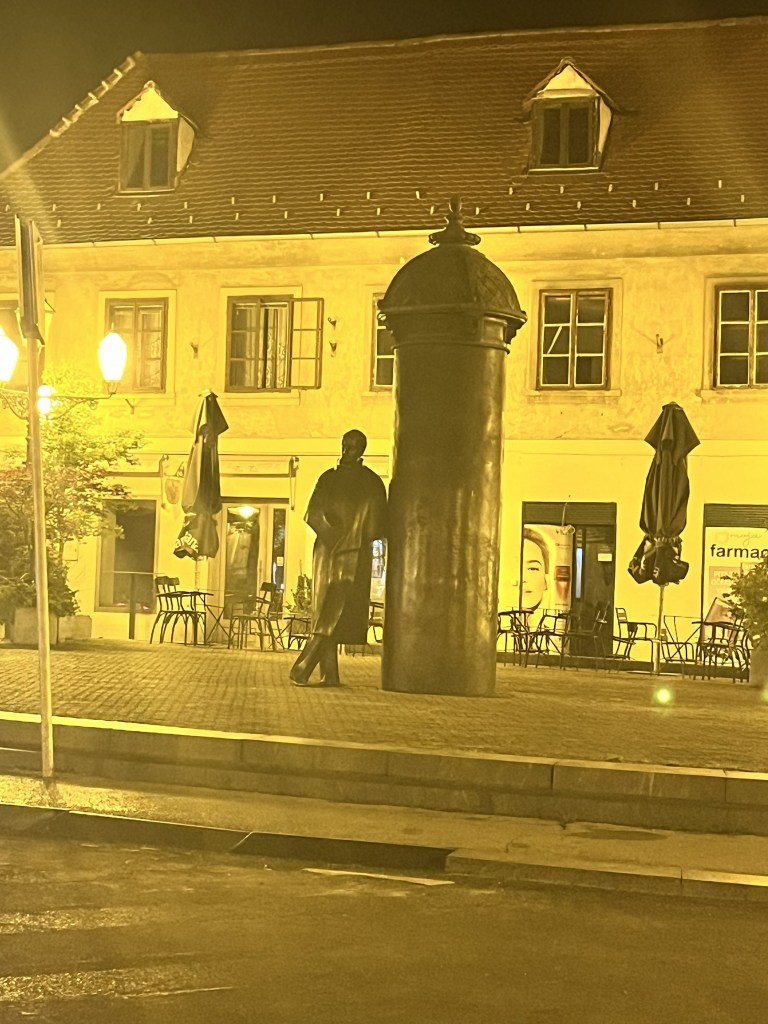
Zagreb is the capital of Croatia, a city of around 767,000 people, and it carries a history shaped by forces that have been shaping Central Europe for a thousand years. The Habsburgs, who ruled Croatia as part of the Austro-Hungarian Empire from the 16th century until 1918, left behind a legacy of wide boulevards, neo-baroque architecture, grand café culture, and a civic confidence that still defines the city’s character. Walking Zagreb’s streets, you sense that a city can absorb its history without being trapped in it — that the past can become a foundation rather than a cage.
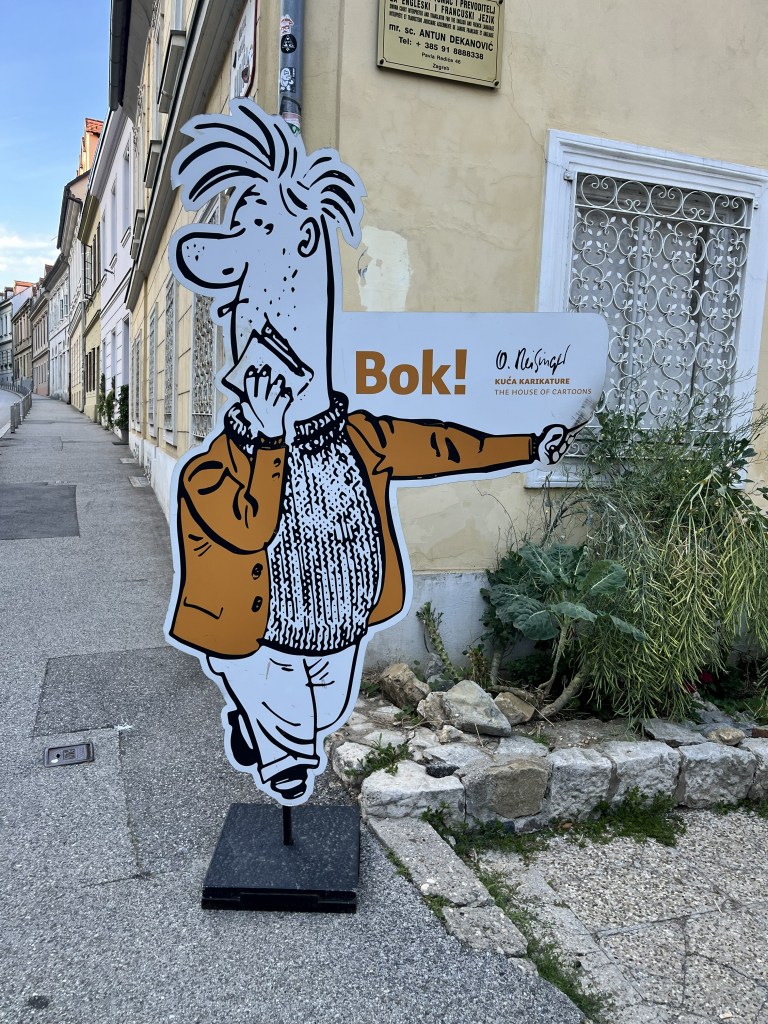
Zvonimir — my guide, my friend, and in many ways the reason I was there at all — walked me through the city as only someone who genuinely loves a place can. There is a difference between being shown a city and being given one, and what Zvonimir gave me was the latter. He is, in the truest sense of the phrase, a man of letters: over the years he has translated works as varied as Pinocchio, the Decameron, Dr. Dolittle, Peter Pan, the stories of Ephraim Kishon, Huckleberry Finn, Chekhov’s novellas, and the prose of the Slovenian writer Ivan Cankar.
Each translation is its own act of cultural bridge-building, a labor of love that requires you to hold two worlds in your head at once and find the door between them. Browsing the shelves of Zagreb’s independent bookshops and finding his name on the spines of books felt like discovering a quiet kind of magic — the particular magic of a person who has spent their life putting words into the hands of people who needed them.
The first evening, Zvonimir took us to a local place for seafood. The fish was freshly grilled and fried, simple and perfect in the way that only very fresh things can be simple. With it came a Žlahtina — a white wine grown mostly on the island of Krk, straw-gold in the glass, carrying a faint mineral note that tasted like the sea smelled. The kind of wine that makes you feel you are drinking the island itself.
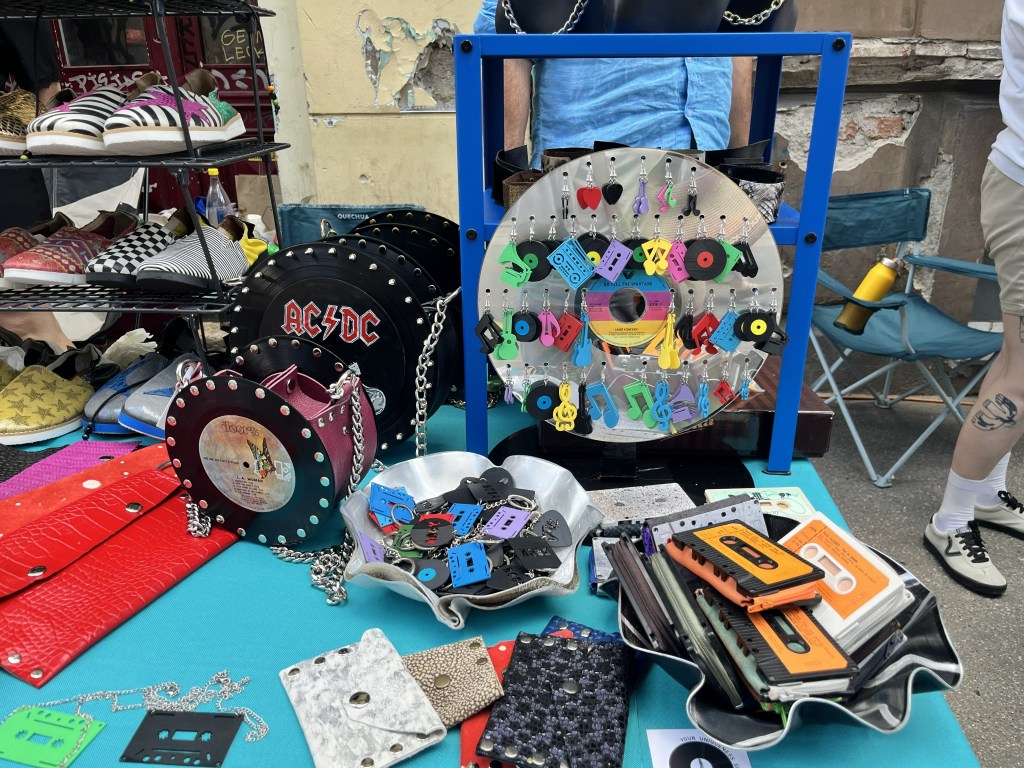
The following day, we strolled through #Projektilica, a recurring Zagreb event that transforms the streets into an open gallery of handcrafted objects. The smell of warm wood and fresh linen and sun-heated canvas filled the air. Live music played from corners and doorways — not polished, not performed, just people making sound because the day asked for it. Painters, ceramicists, textile artists, jewellery-makers, and woodworkers displayed their work in the afternoon light with the unhurried confidence of people who trust what they make. There was no forced festivity, no manufactured atmosphere. It was simply a city going about the business of being creative, as naturally as breathing.
To have a true taste of Zagreb’s everyday life, Zvonimir took us for ćevapi — also known as ćevapčići, a grilled dish of minced meat, smoky and charred on the outside and yielding within, served with flatbread and possibly cream cheese. It originated in Serbia in the 19th century and found its way into the daily life of Croatia so thoroughly that it has stopped being foreign and simply become food. We ate it, surrounded by the particular cheerful noise of a city at lunch.
Weathering the sunny warm day, we walked to the Market square, where over a good cold local beer — the kind that arrives in a glass so cold it fogs immediately — our afternoon took a turn none of us had planned for.
Zvonimir introduced me to a group of local animation artists who were there for #AnimaFest — the World Festival of Animated Film. Established in 1972 and built on the legacy of the celebrated Zagreb School of Animation, AnimaFest is the second-oldest animation festival in the world, following only by the Cannes of Animation. It is fully accredited by FIAPF, and Grand Prix winners qualify directly for the Academy Award for Best Animated Short Film.
The animators around the table were candid and generous in conversation — talking about the labor-intensive details of their craft, the challenge of funding educational projects through grants, the peculiar economics of a medium that is everywhere and yet rarely pays its practitioners what it should.
There was no bitterness in the conversation, only a clear-eyed honesty that comes from people who chose their work freely and have made their peace with what it costs. The afternoon smelled of spilled beer and sunscreen and warm stone, and the table talk was the kind that makes you forget entirely that you are a stranger
Zvonimir was not out of place among them. His own animated film project, Croatian Tales of Long Ago — based on the celebrated collection of folk tales by Ivana Brlić-Mažuranić, sometimes called the Croatian Hans Christian Andersen — won the Grand Prix at AnimaFest, an honour considered the equivalent of an Oscar in the world of animated short film.
The project was praised as “the most important project in Croatian animation and cinematography of the decade” and “the best Croatian cultural project for the 21st century.” Sitting beside him, listening to the others speak about his work with the unselfconscious admiration of peers, I felt the particular pleasure of seeing someone fully in their element — the way a key looks when it is finally in the right lock.
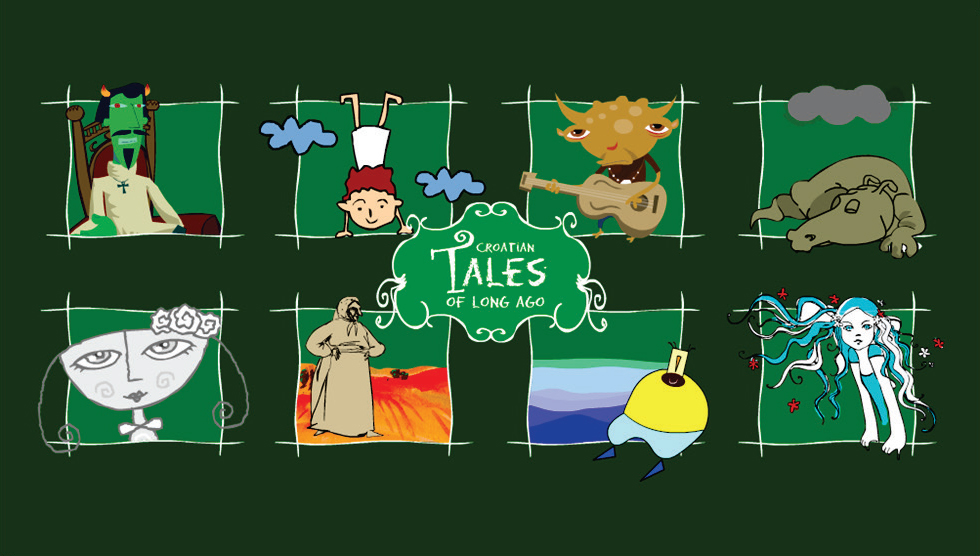
Zvonimir is also producing a feature animation film, Twelfth Night, based on two Renaissance classics — William Shakespeare and Croatian playwright Marin Držić — which will be set in Dubrovnik. A story told in the stone streets I had walked two days before. The city already feels like a stage. I cannot wait to see what he builds in it.
The conversation over that table reminded me that Zagreb has been a creative hub far longer than most of the world knows — creative enough to successfully establish the #Museum of Broken Relationships, founded by artists Olinka Vištica and Dražen Grubišić, which in 2011 was awarded the Kenneth Hudson Award for European Museum of the Year for being Europe’s most innovative museum. A museum built on what people leave behind when love ends.
If that doesn’t tell you something about Croatian wit, I don’t know what will.
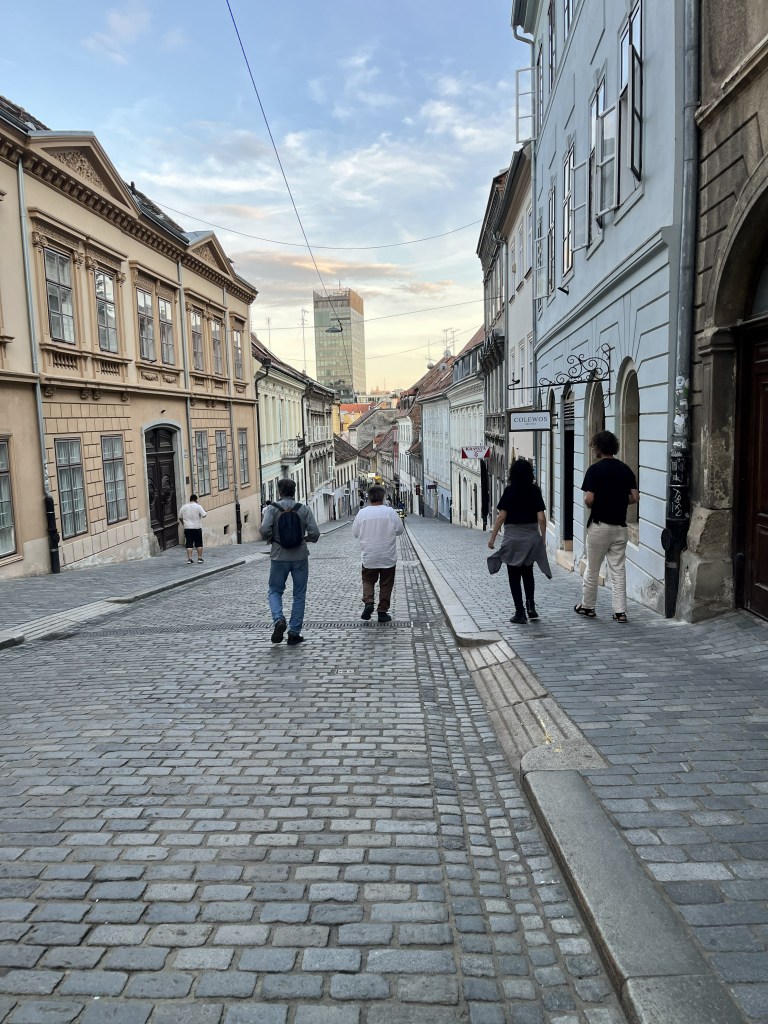
Zvonimir and his friend Kristian walked us to the Upper Town — Gornji Grad — an area that sits on a ridge that has been continuously inhabited since at least the medieval period. The cobbled streets open onto views of the red-roofed lower city below like a painting that hasn’t yet dried, everything still vivid and close. To get there, we took the funicular connecting the upper and lower towns — short, improbable, and charming — which has been running since 1890.
Riding it, I felt an affection for its absolute lack of ambition: it does one thing, it has always done one thing, and it does it with the quiet dignity of an institution that has outlived every trend.
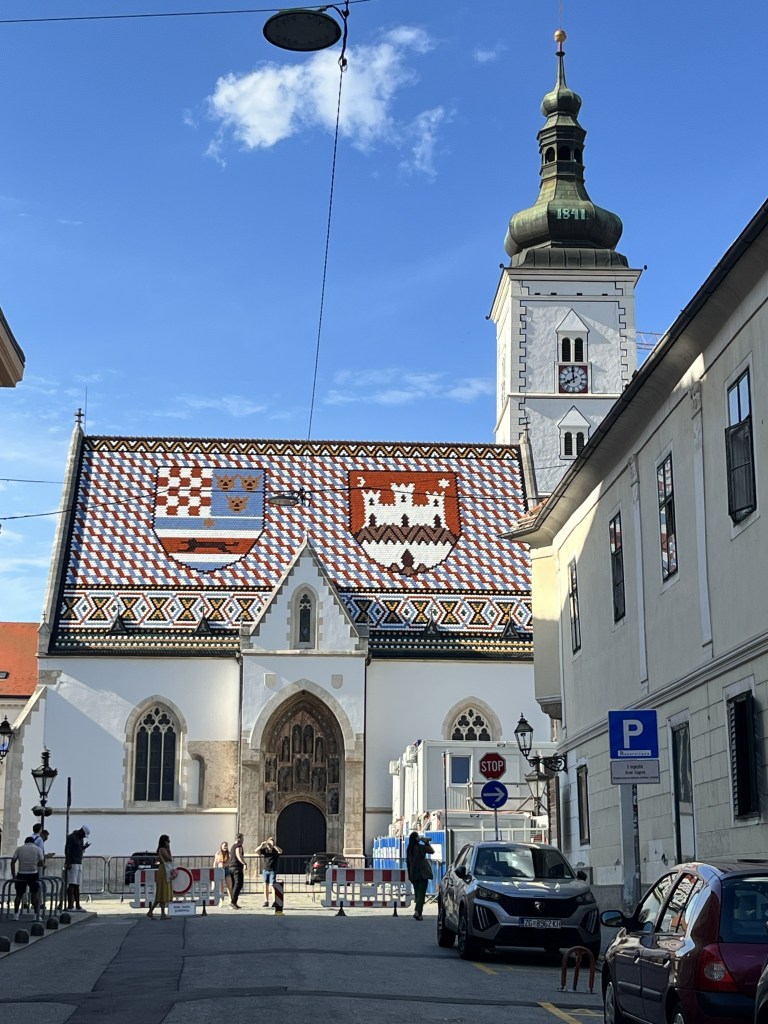
Afterwards, we descended to the Lower Town — Donji Grad — largely built in the 19th century in a grid pattern, a deliberate act of urban planning that reflects the Austro-Hungarian taste for order and elegance.
The difference between the two towns is the difference between a sentence written by hand and one set in type — both say the same thing, but one carries the warmth of the person who made it.
Of course, we did not skip the Cathedral of Zagreb, in constant renovation after a couple of earthquakes, its twin neo-Gothic spires visible from almost everywhere in the city, standing since the 13th century as the tallest structure in Croatia.
Standing below them, you feel their height in your chest rather than just your eyes — the physical sensation of something much older and taller than you, demanding nothing, simply being.
A stroll through Maksimir Park was unskippable: a beautifully landscaped green space dating to the late 18th century, one of the oldest public parks in this part of Europe.
The afternoon light fell through the trees in the particular way it falls through old trees — sieved, softened, turned green by the leaves — and the sound of the city faded behind the rustle of leaves and the distant laughter of children.
But what I found in Zagreb was not the history I expected. It was something harder to name.
As the afternoon moved into evening, Zvonimir and Kristian guided us back through the streets, past the funicular and through the smaller alleys where a different kind of fair was taking place. Painters sold their canvases leaning against iron railings. Artisans displayed leather bags and hand-painted goods.
The air carried the warm smell of linseed oil and old leather and something floral that drifted from an open window above.
To enjoy the afternoon breeze and take in all this creative work, we stopped for a local beer with some of Zvonimir’s friends — and that is where one of them stole my OMG spot entirely.
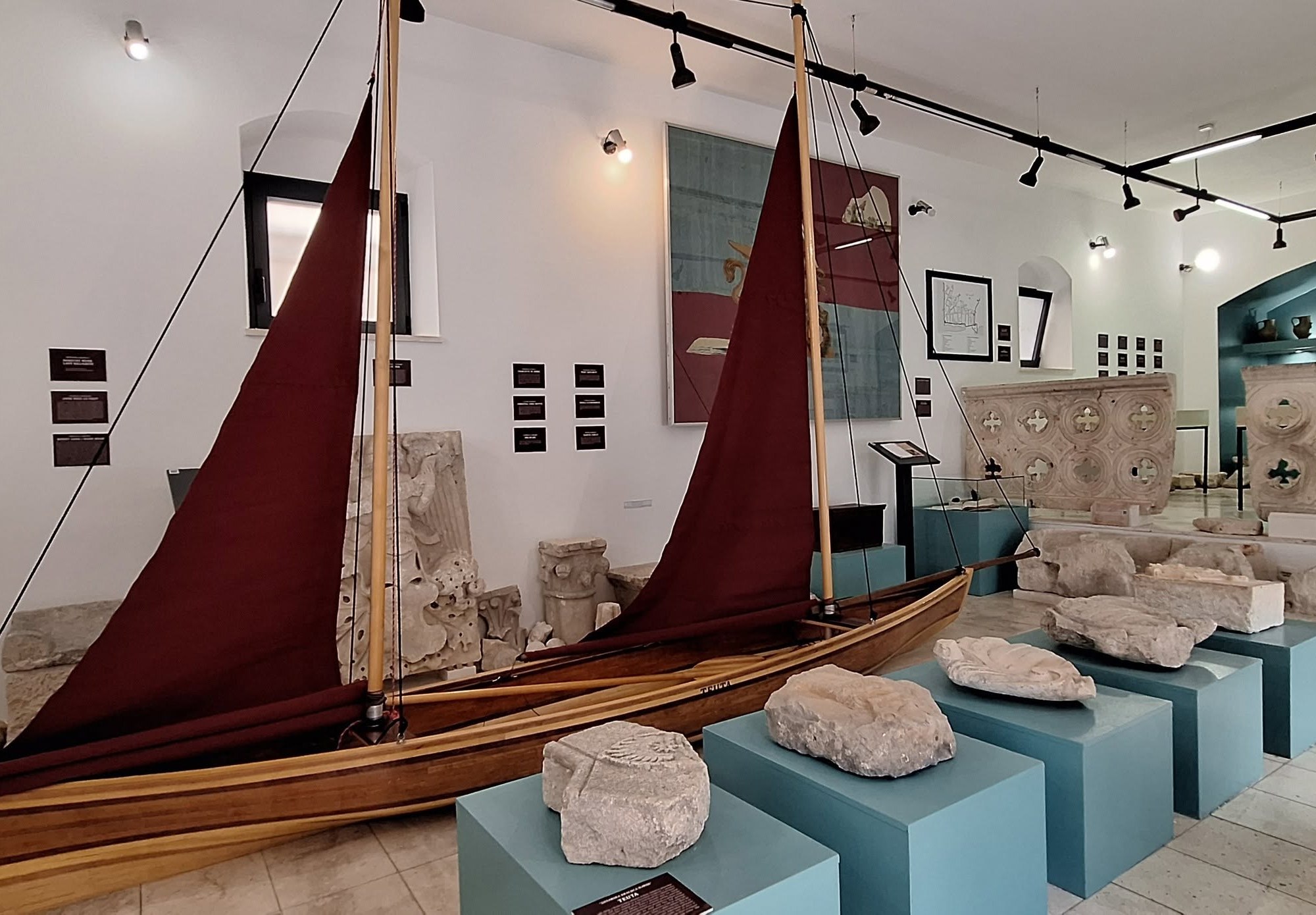
Her name is Argo Nauta, and she builds wooden kayaks and sailboats by hand. Not reproductions. Not kits. Fully crafted vessels, every piece of wood shaped, fitted, and finished in her workshop, each one different from the last. She gave us a tour of her gallery — a quiet, beautiful space where one of her completed kayaks rested as the centerpiece.
The wood glowed with the kind of warmth that only comes from hundreds of hours of careful, attentive work — a warmth that comes not from light but from intention, the way a much-loved object seems to radiate something back at you. The grain ran in long, confident lines, the curves of the hull as precise as a sentence that has been edited until every word is the right word.
“It takes me about six months to finish one piece,” she confided, with the quiet pride of someone who has made peace with the fact that what she makes cannot be hurried. Not six months of eight-hour days. Six months of choosing the wood, of understanding its nature, of listening to it the way you listen to a person you are trying to understand.
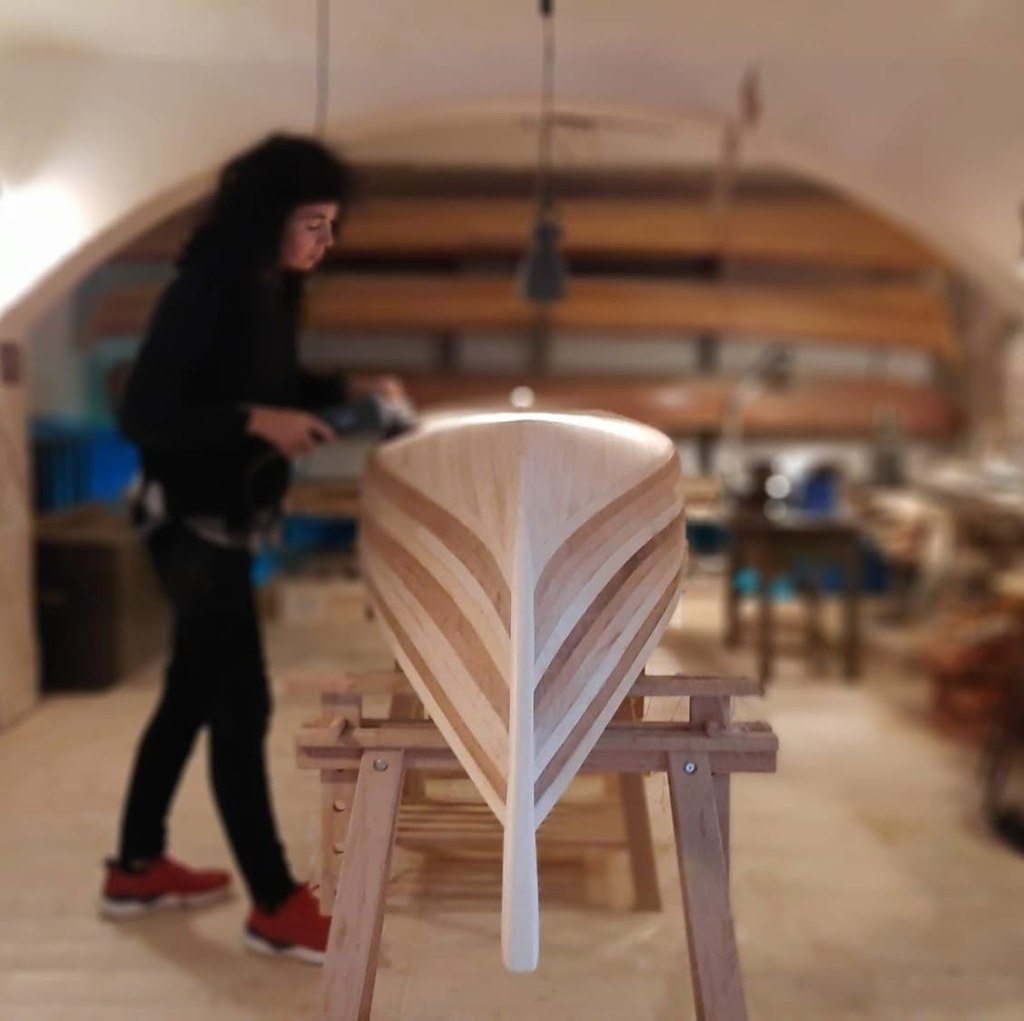
Looking at it, I felt the weight of the craft. Not its physical weight, but the weight of intention, of patience, of the particular pride that comes from making something that works and making it beautiful at the same time. Something unique as each of her creations is.
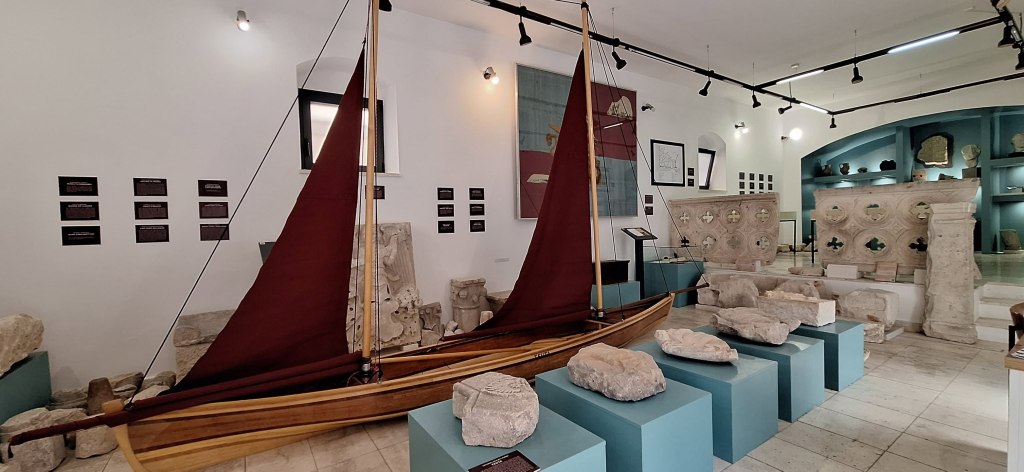
Before we left the gallery, Argo Nauta opened a bottle of pelinkovac and poured it for all of us.
Pelinkovac is one of Croatia’s oldest and most cherished drinks — a bittersweet herbal liqueur made primarily from wormwood (pelin in Croatian) along with a blend of other botanicals, some of them gathered from the Velebit mountain. The first commercial recipe was created in Zagreb in 1862 by a pharmacist named Franjo Pokorny, and it was initially sold in pharmacies as a stomach remedy. It eventually made its way to the court of Napoleon III. Today it is served chilled, without ice, as an aperitif or digestif — though in Zagreb, the distinction between the two tends to dissolve pleasantly as the evening wears on.
It arrives on the tongue as a contradiction: bitter first, then sweet, then something herbal and dark and faintly medicinal that blooms at the back of the throat like a secret being kept just long enough. It does not taste like the night so much as it tastes like the beginning of one.
We raised our glasses. Zivili! we all said in an unrehearsed chorus, — the word rising and falling with the particular warmth of people who have just become, without quite noticing, comfortable in each other’s company..
The city was beginning its transition from afternoon to evening, the light shifting from white to gold, the shadows lengthening across the cobblestones, the air cooling just enough to make you aware of how warm it had been. Time to continue on.
As we did, we passed another outdoor café bar where Zvonimir’s friends had claimed a table and were waving us over. I sat down, and that is where I saw her again — Ruzica, a woman I had spoken with briefly earlier in the day. We had exchanged only a few minutes of conversation before, but when she looked up and we greeted each other, there was no awkwardness, no re-introduction needed.
Something had been established between us in those few minutes that did not require renewal.
She said something I have thought about many times since.
“I am so glad to have met you. I enjoy meeting recognizable strangers.”
I have rarely heard a place described so precisely in so few words. Because that is Zagreb — and perhaps Croatia entirely — in its truest form. A place where you arrive not knowing anyone and leave feeling, somehow, that you have found your way back to somewhere familiar.
As it was time to continue my journey and leave Zagreb, I reflected on my trip. as the city receded behind me, its red roofs and twin cathedral spires slowly replaced by highway and fields and the ordinary geography of transit. But the feeling the city had given me did not recede with it. It settled, the way good experiences settle — not dramatically, but quietly and permanently, like sediment finding the bottom of still water.
I had come to Croatia because a friend insisted I should. I am glad, in the deepest sense, that I listened.
I came expecting the coast and found a capital. I came expecting scenery and found artists. I came expecting history and found people who carry it lightly, who build kayaks by hand and translate Chekhov and make films that win Oscars and pour old drinks for strangers in galleries at dusk, and say things at café tables that you carry home inside you.
Croatia deserves better than the travel internet’s consensus — which tends to stop at Dubrovnik’s walls and the Game of Thrones filming locations.
It is all of that, yes. But it is also Zvonimir walking you through a city he loves,with the unguarded generosity of someone who has never stopped finding it remarkable. It is the wood grain of a handmade kayak. It is the bitter-sweet weight of pelinkovac on your tongue as the sun goes down, and a city you arrived at as a stranger becomes, improbably, somewhere that feels like yours..
It is recognizable strangers, just like Ruzica said it. And to all of the wonderful people I met, I raise an imaginary glass across the distance and say:
Bok — and Bok!
Travel Bites is a personal travel journal. All experiences described are the author’s own.
Thank you for reading my blog. Please feel free to share your traveling stories. Send me a personal note!
Remember to follow me on social media @JBRADIANT and to visit my website for upcoming books and events.
 lifeinxxidotcom