Travel bytes
JULES HEARTLY | SUMMER 2026
I got curious about Cadaqués a few years ago, standing inside the Teatro-Museo Dalí in Figueres, watching the painter’s obsession bleed from every wall. It was obvious Dalí was in love with something — some place — the way only a surrealist could be: not quietly, not reasonably, but with his whole deranged heart. The town he kept returning to was Cadaqués.
Why? I didn’t know. I had read about it, but the descriptions — whitewashed walls, blue water, narrow streets — sounded like a hundred other jewels along the European coast. Words, I have learned, are inadequate ambassadors for certain places. They promise beauty and deliver postcards. They cannot deliver what the body feels when it finally arrives.
So this year, I decided to conduct my own research. Cadaqués became a necessary stop on a longer road trip — not a detour, but a destination wearing the disguise of one.
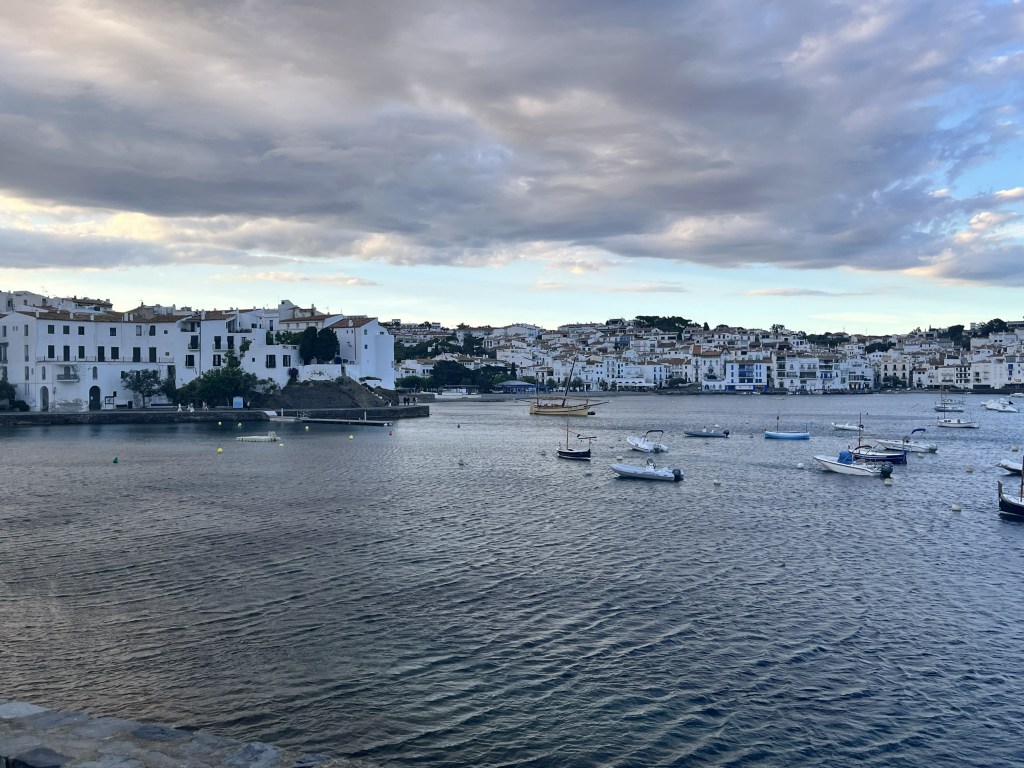
After leaving the A-7 highway, there is a 25-minute stretch of road that felt designed to test my commitment. Narrow, winding, hugging the rock face of the Serra de Rodes — the kind of road that makes you wonder if the GPS has gone rogue. The olive trees thin out. The light sharpens. And then, without warning or ceremony, the road bends one final time and releases you.
There it lay: my answer.
The silent beauty of Cadaqués stood in front of me, becoming a loud answer to my question — a white constellation of houses pressed into the dark flank of the mountain, tumbling toward the stillness of this particular corner of the Mediterranean.
Something loosened in my chest. The kind of exhale that only happens when you encounter what you did not know you were looking for.
Dalí once called Cadaqués “the most beautiful village in the world.” Standing there for the first time, I was not inclined to argue.
Cadaqués was first settled more than a millennium ago — Iberian and Roman traces still sleep beneath its cobblestones — but its identity was shaped most decisively by the sea and by isolation. For centuries the village was accessible only by boat; the same rugged cliffs that make the approach so dramatic were once its only shield from the outside world.
That isolation turned out to be a gift. The result is a village that feels preserved not by decree but by geography, as if the mountains themselves decided what could and could not enter.

Artists discovered this sanctuary in the early twentieth century. Picasso painted here. García Lorca wrote here. Man Ray, Miró, Buñuel — they all came, drawn by the quality of the light and the particular silence that settles over the bay at dusk.
Once I arrived, and after checking in at the Sol Ixent Hotel, I strolled through the Cadaques old city in the afternoon heat- although it was early summer-, when the stones radiate warmth like sleeping animals and the shadows fall at precise angles through the alleyways. Some of the streets are too narrow for cars and just wide enough for two people to pass if one turns slightly sideways — an involuntary intimacy the town enforces on every visitor.
The smell of salt and warm kitchens and maybe something floral — lavender, maybe, or the memory of lavender — settled over everything.
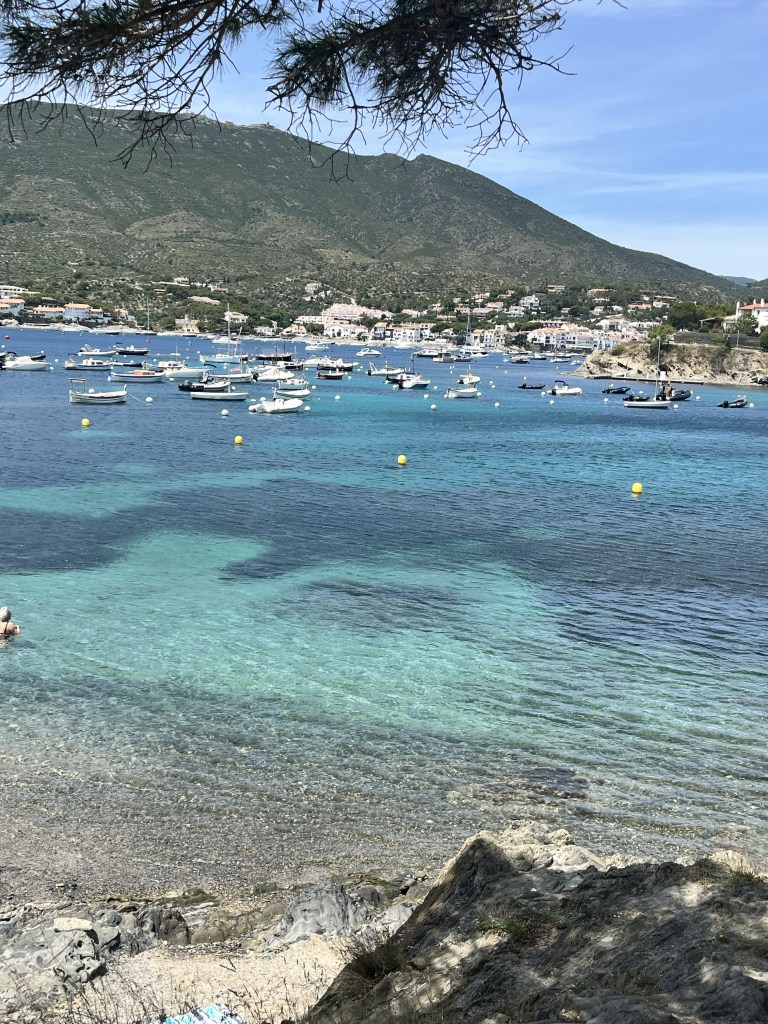
The beaches there are not the wide sandy tableaux of the package-holiday imagination. They are coves, pebbled and private, tucked between the dark volcanic rock like parentheses in a longer sentence. There are a few sandy beaches but most of the ones I walked through were pebbled coves.

After a necessary stop for a cava and tapas at the Maritim Bar right by the promenade, where the view makes you forget heading somewhere else. I headed out looking for a dining place. “You may stay longer and enjoy more tapas. The cook is back from his break.” The waiter suggested as I hesitated to leave my well located table by the water.

I found a good place to eat at La Sirena, a seafood restaurant on one of the narrow streets of the old town, very close to the malecon, where the catch arrives with an honesty that urban restaurants rarely manage to imitate. Grilled fish with the char still warm. Mussels in a broth that tasted like an argument for eating simply, and black rice. And to close: Ratafia, Catalonia’s beloved herbal liqueur — dark, bittersweet, and complex in the way that all good endings are. It sat on the tongue like a small story. “A sin, if you leave without tasting it.” the owner told me when he approached the table to offer the after dinner drink.
While there, the restaurant’s phone kept ringing with locals and tourists making dinner reservations. I was lucky to get an in- promptu table. “If you don’t mind sitting inside.. I have a table for you” told me the waiter who spoke good English, perfect French and Catalan.
The night had fallen when I left the restaurant, and I didn’t know whether the post-card view of the town bay was more beautiful than the earlier afternoon. I saw couples walking freely near the water, and a few groups of teenagers joking to each other as they pretended to get into the still cold Mediterranean water, while taking selfies in their senseless effort to capture what they felt at that moment.

It had been a long day for me, so a walk back to the hotel was not an option. I called a local car service. When my ride arrived, to my surprise the driver was not a local. Or at least not a born local, but an adopted one. Jan was German. “I used to come here on vacation with my family every year. Then I came on my own. And then I fell in love with a woman from this town, after falling in love with the town of course!” he said joking as he shared his story with me, and talking about how he enjoys providing car riding services to tourists. “I prefer to communicate in English. My Catalan still is not that great.” he confessed. “Cadaques is beautiful all year round. The weather is good even during the winter. Once you are here, there is no incentive to leave.” he told me. I considered that as I got to my room and listened to the ocean waves sound carrying me to sleep.

The following morning during breakfast by the pool, I noticed a few happy couples of french tourists, probably retirees. One couple in particular, struck my attention. He was probably in his late sixties, tall, with salt pepper hair and light brown eyes, with a contentment expression, looking at his companion, a lady in her early sixties, light brown hair falling on her shoulders, a peaceful facial expression, and wearing a long summer dress. The way they behaved around each other, with care, with a hint of sexual tension, an occasional tender kiss, a smile that meant more, and the easiness of someone that cares about each other, made me think of how or if they would fit as characters of my upcoming romantic novel, Sexty Shades of Sixty.
After breakfast, I stopped at the hotel reception to get some guidance in places not to miss while in Cadaques. That is where I met Carmen. A woman I quickly discovered, was also the quiet guardian of the town.
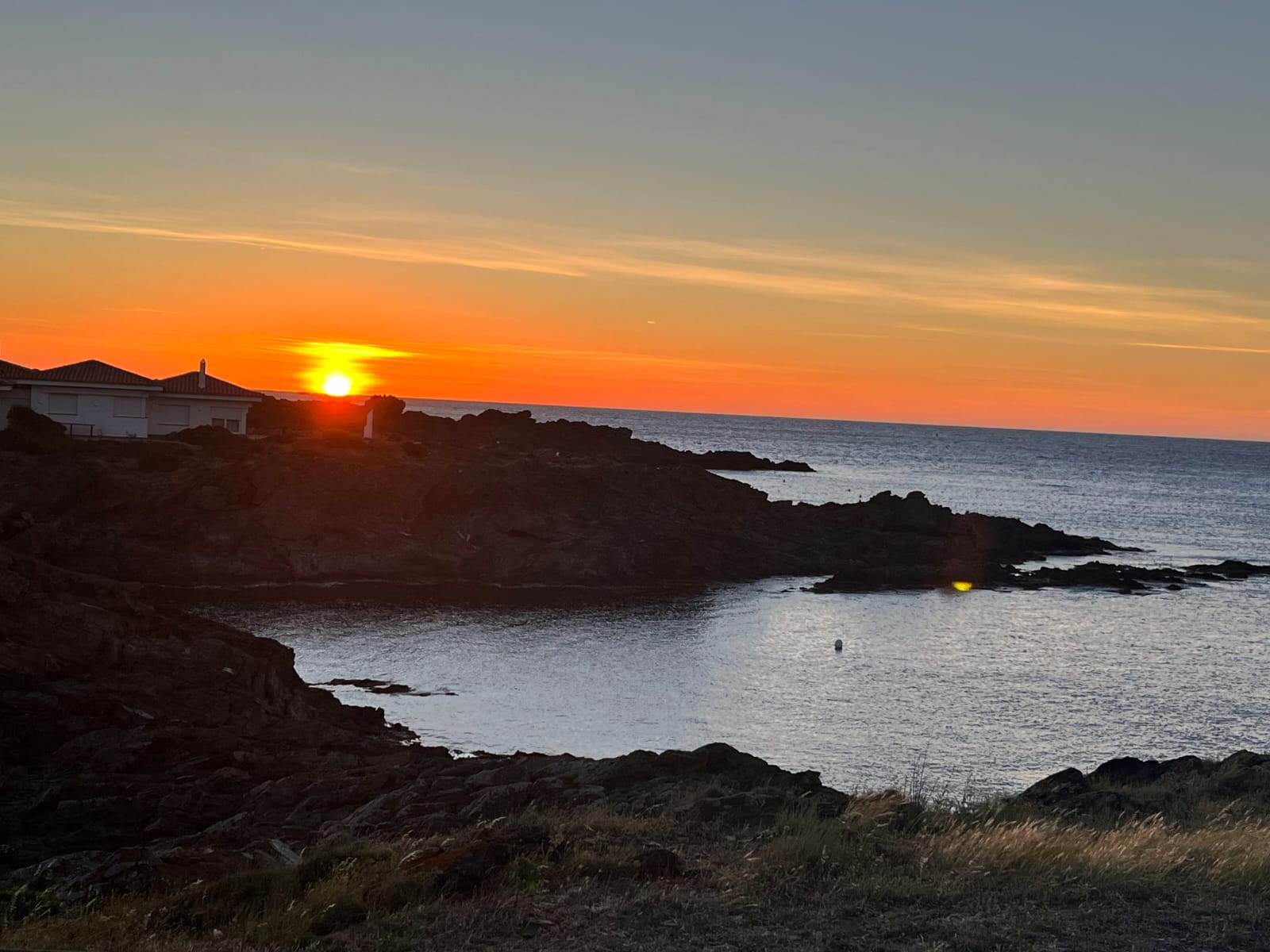
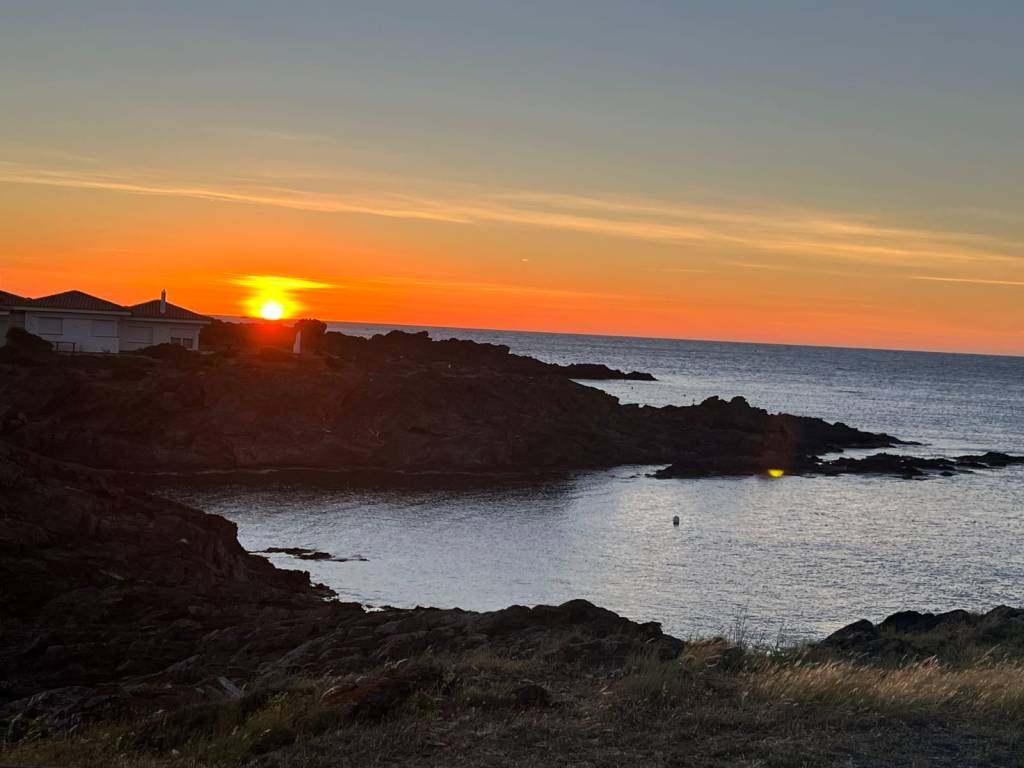
She did not only provided me with tips of places to go, but also guided me to a sunrise spot that did not appear on any map I had seen: a particular angle of rock where the light arrives first and the bay catches it whole. She shared it the way generous people share things — without drama, as if the world’s beauty were a practical resource rather than a secret to hoard.
She told me about her life in the water. A nature lover who dives and snorkels with her family, she described how each time she goes under the surface she is counting, cataloguing, noticing what is less present than the year before. Her relationship with the sea is not recreational — it is a long conversation, and one she takes seriously.
And then she told me about the books. Her grandmother buys a book, reads it, passes it to Carmen’s mother. Her mother reads it, passes it to Carmen. Carmen reads it, and the three of them talk about it — a family book club threaded across generations, novels moving like heirlooms through the women of the family. Carmen has a whole terrace floor dedicated to keeping all the volumes that have passed through their hands. I thought: this is what a library looks like when it is also a history of love.
You carry certain conversations with you when you leave a place. This was one of them.

The one thing that surprised me most during this road trip, was not only the beauty of Cadaqués — beauty I had been promised — but its quality of silence. There is a sober, spectacular peace there at all times of day: during enchanting sunrises when the light arrives tentatively across the water; during sunny afternoons when part of the village seems to nap behind its shutters; and most of all during those suspended evening moments when the sun is almost down and the afternoon is not yet ready to let it go — when the sky turns the particular shade of rose-gold that makes you understand, at a cellular level, why painters kept coming back.

Following Carmen’s suggestions, and after a few dips into the still cool sea water, I visited The Church of Santa María. It watches over all of the town, from its perch on the hill.

Built in the sixteenth century, it hides behind a simple whitewashed exterior — but step inside and the Baroque altar erupts with an ornate, gilded energy that feels like a secret the village has been keeping.
I climbed the winding Ell call and Dr Callis streets, to reach it and I arrived breathless, as pilgrims perhaps always should, to find the panoramic view of the bay shimmering below and the mountains rising behind.
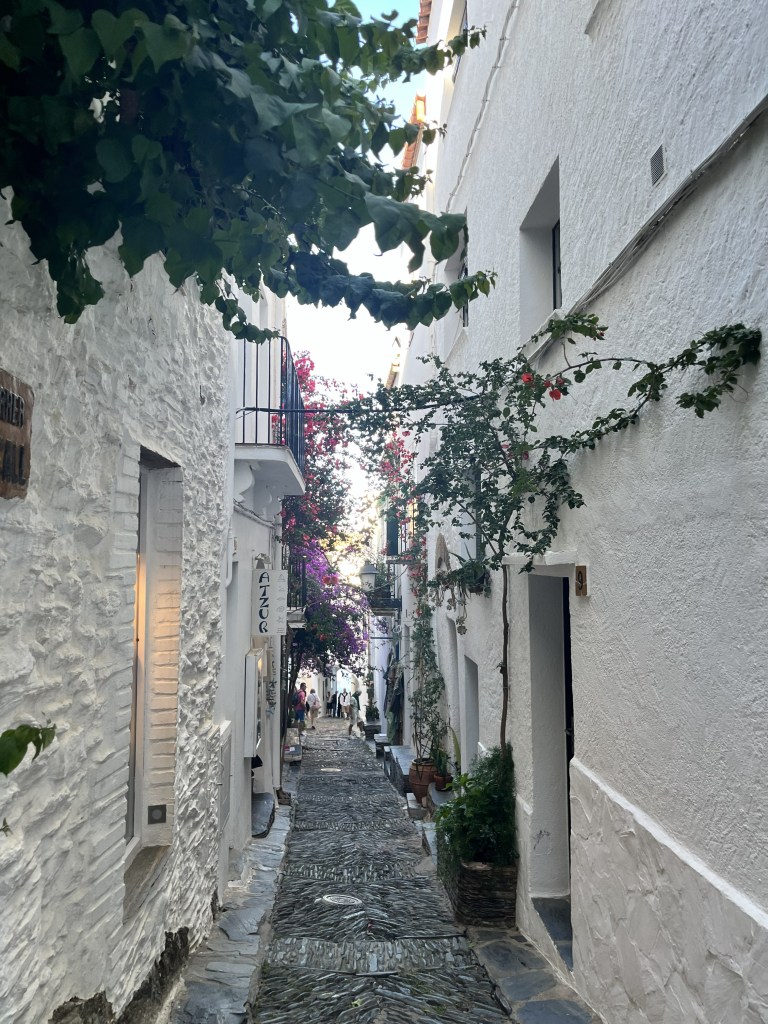
But it was not only the material views and scenery that captivated me. There is a category of travel experience that no guidebook can promise: the people who step into your path and leave something irreplaceable. And right there outside the Church, was one of them.
Andrea. He was sitting on the stone steps with a nice guitar, playing to no one and everyone. Not performing — offering. The notes drifted down through the narrow streets below, softened by the warm air, becoming part of the sound of the place itself. I stopped and listened longer than I meant to.

There are moments when music does not accompany a landscape but reveals it, lifts it into its truest register. That was one of those moments. The church behind him; the bay beyond the rooftops; the late light; the guitar. A small constellation of the irreproducible.
Little things like that only a few tourists may take for granted, are part of Cadaques unique unforgettable permanent picture.
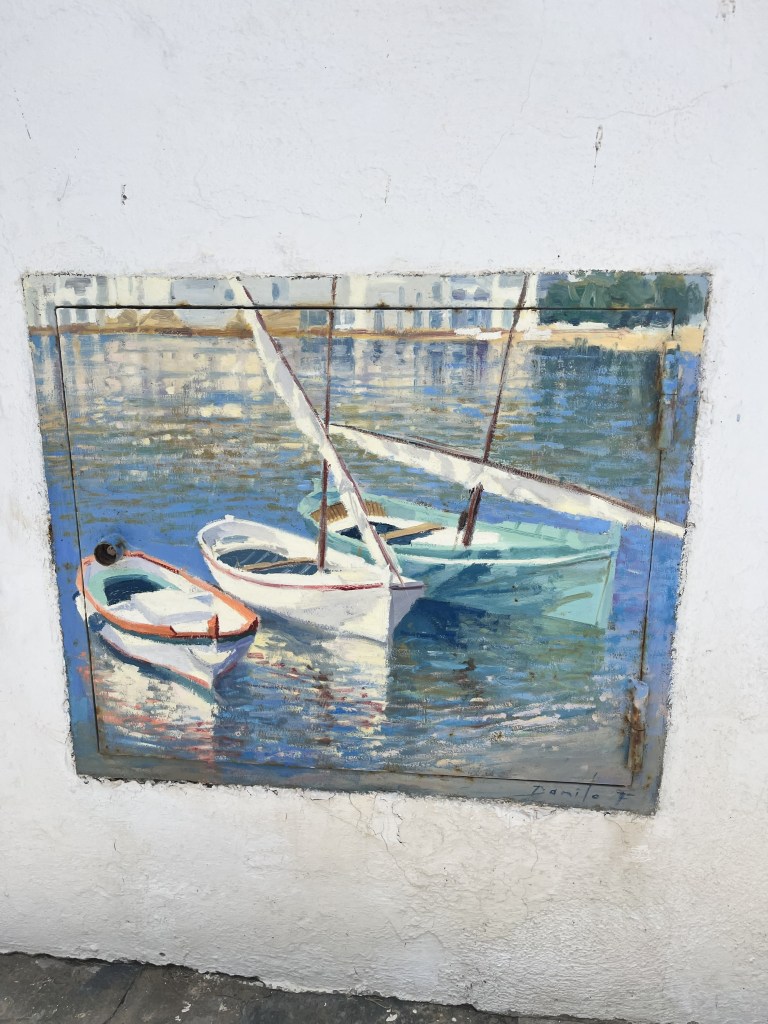
One, I am inviting you to experience. And some local artists have taken some creative steps to make sure you feel tempted to do so, for example using the electricity covers as canvas! As you my dear reader may see below and above.
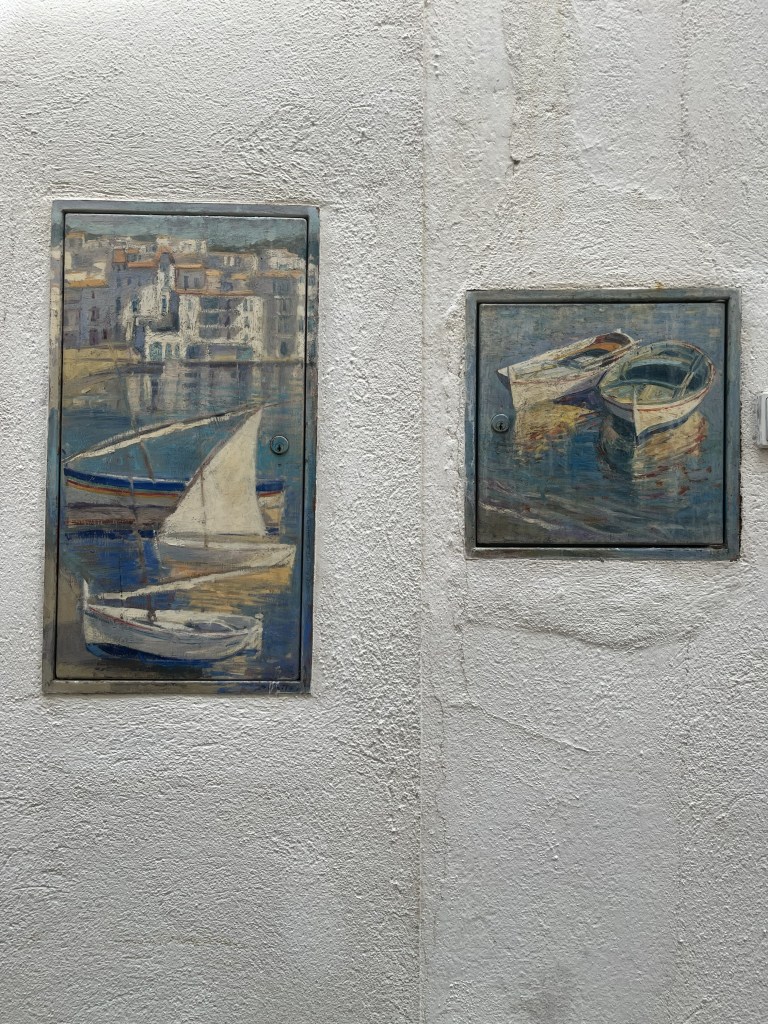
Cadaques is a still picture in my memory, painted by nature and geography, without additional brushes needed to finish this image of a town where the only choice given is to live life as something to enjoy … without any rush.
Thank you, Dalí, for without knowing it, sharing this place with the rest of us — and to Cadaqués, for hosting me and leaving my heart full of grateful memories that have, since my return, refused to behave like ordinary memories. They keep arriving unannounced, tasting of Ratafia and salt air and the sound of a guitar on warm stone steps.
Thank you for reading my blog. Please share your unique travel experiences. Drop me a line or two.
Check my website for upcoming books and events. And follow me on social media @JBRADIANT
 lifeinxxidotcom
I had no idea that Cadaqués was Dalí’s emotional and creative center. And to think it’s so close to my homeland! Thank you, as always, for sharing these beautiful places and the stories behind them. You always make me want to pack a bag and go.
LikeLike